
World Liberty Financial co-founder Zak Folkman is pushing back against accusations that the Trump-backed DeFi project hid a “backdoor” feature in its smart contracts. His defense is simple: everything was on chain and visible to anyone who wanted to look.
The person searching and not satisfied with what he found is Tron founder Justin Sun. Sun has filed a federal lawsuit against WLF in California, alleging fraud and breach of contract over what it describes as a hidden blacklist feature embedded in the $WLFI token’s smart contract. The feature, Sun claims, was used to freeze approximately $107 million worth of tokens in its wallet.
The back door that wasn’t hidden, or at least it was
Sun claims that WLF’s smart contract for the $WLFI token includes a blacklist feature that gives the project unilateral power to freeze or confiscate user funds without notice. Folkman’s counterargument rests on the fundamental nature of blockchain technology. Smart contracts are public code. Anyone with a block explorer and basic knowledge of Solidity can check what a contract does before committing a single dollar. All features and unlocks were visible from the start, according to Folkman.
The question is not whether the function existed on-chain. What matters is whether investors have been meaningfully informed about its consequences before putting money into it.
How the relationship soured
Sun wasn’t just a random holder caught in a compliance investigation. He invested about $45 million in it $WLFI tokens and took on an advisory role on the project, with a total capital commitment estimated at $75 million.
Sun’s wallet was blacklisted in September 2025, freezing the approximately $107 million in the wallet $WLFI tokens. Sun had been an advisor and a major backer and then suddenly found his tokens frozen.
WLF has claimed that any intervention using the blacklist feature is aimed at protecting users and emphasizes emphasis on KYC and AML compliance. Sun’s lawsuit accuses WLF of fraud and breach of contract, with the project abusing the blacklist feature.
The broader transparency debate
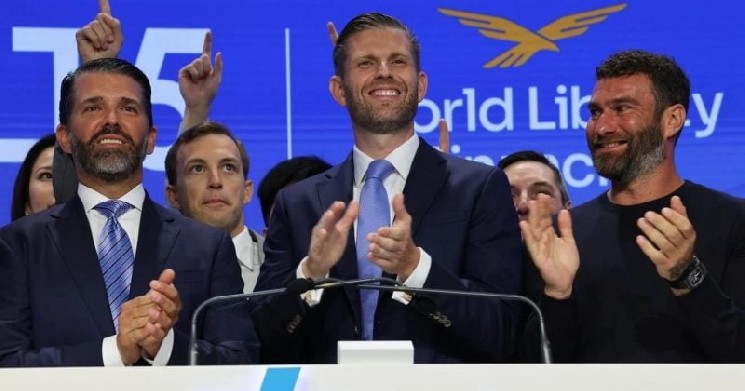
World Liberty Financial carries the Trump family name, with Eric Trump and Donald Trump Jr. be involved in its management. Folkman’s defense that on-chain code equals transparency reflects a philosophy common in DeFi: that “code is law” and anyone who interacts with a protocol has a responsibility to understand what the code does.
Including a blacklist feature in a token contract is not necessarily harmful. For example, USDC’s smart contract has a blacklist feature that Circle has used to comply with OFAC sanctions, and Circle’s ability to freeze funds is well known and openly discussed in its documentation. The question for WLF is whether the communication around the $WLFI token made the ability to blacklist just as obvious to investors beyond just deploying readable code.