
On Oct. 10, the development team for gaming project FinSoul carried out an alleged exit scam, siphoning away $1.6 million from investors through market manipulation, according to a recent report from blockchain security platform CertiK shared with Cointelegraph.
The FinSoul team allegedly hired paid actors to pretend to be its executives, then raised funds for the sole purpose of developing a gaming platform. However, instead of actually creating the platform, the FinSoul team allegedly transferred $1.6 million in bridged Tether (USDT) from investors to itself. Blockchain data indicates developers then laundered the funds through cryptocurrency mixer Tornado Cash. Surprisingly, this was not the first allegation of misconduct against FinSoul’s developers.
On May 23, decentralized finance (DeFi) project Fintoch published a press release claiming it had adopted “advanced technology to develop the FinSoul U.S.-based metaverse platform” and had gone “live.” The announcement stated that the company was using “advanced technologies such as Unreal Engine 5 and Cocos 2D” to develop “sandbox worlds, multiplayer sports, leisure experiences, player socializing, MMORPG” and other types of gaming content.
The same day, on-chain sleuth ZachXBT reported that the original Fintoch DeFi project had performed an exit scam. The team had seemingly stolen $31.6 million and bridged it to Tron blockchain in an attempt to launder the funds, ZachXBT claimed.
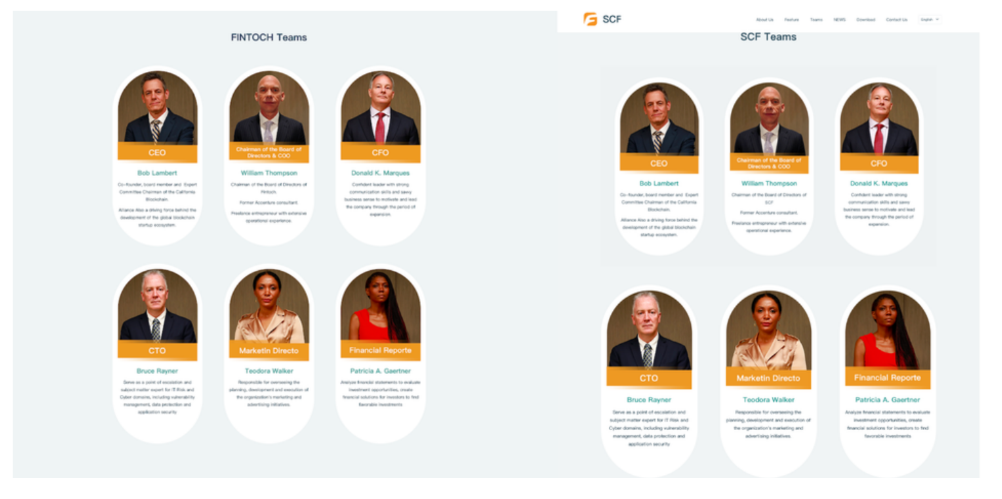
In response, CertiK claims that the team “rebranded” in August, changing its name and social channels. “Fintoch” became “Standard Cross Finance (SCF).” CertiK produced an image showing the key executives of both Fintoch and Standard Cross Finance, who appear to be identical.
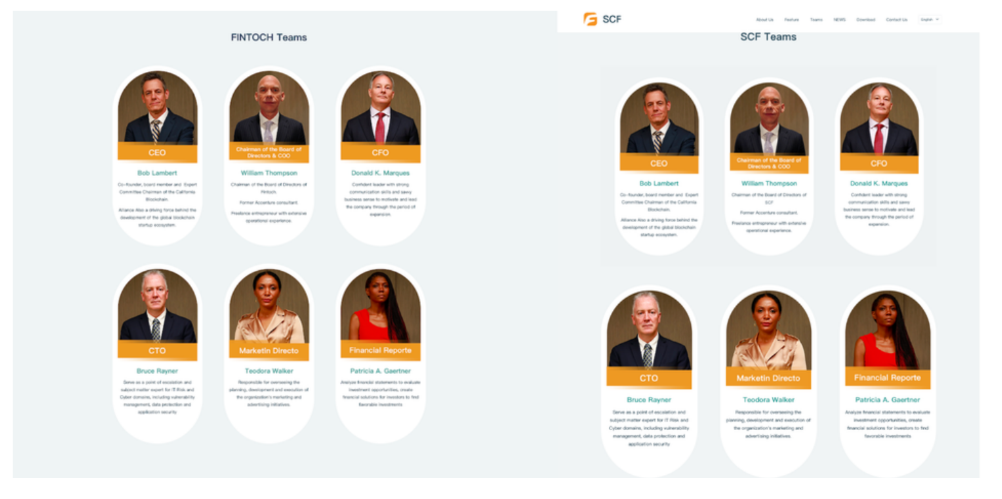
Fintoch and SCF key executives. Source: CertiK
CertiK claims to have verified the real names of the persons listed as the CEO, chief operating officer and chief financial officer of the project. According to it, these “executives” are actually actors who work in the entertainment industry. In addition, CertiK claims that the project’s chief technology officer was listed on a promotional poster for an entertainment company, providing evidence that he is also a paid actor. It could not determine the identities of the other two people claimed to be “executives.”
The rebranded “Standard Cross Finance” team continued to promote FinSoul on YouTube and Telegram, the report states. Its marketing efforts included a video depicting an alleged “R&D Headquarters,” later revealed to be an office building on East Hamilton Avenue in Campbell, California. It also produced a video of an alleged promotional event in Vietnam.
The team page on the Fintoch website names “Bobby Lambert” as the CEO when in reality he does not exist and is a paid actor.
Previously both the Singapore Government and Morgan Stanley issued warnings about this investment scheme. pic.twitter.com/SLxvOCPj1s
— ZachXBT (@zachxbt) May 23, 2023
According to blockchain data, the project deployed its token contract to the BNB Smart Chain network on Oct. 10. At the time of deployment, 100 million FinSoul (FSL) tokens were minted and transferred into the deployer account. The deployer then sent 3 million FSL to other accounts through multiple transactions, leaving 97 million remaining in its possession. One of the transfers was for 210,000 FSL to an address that subsequently used the tokens to create a liquidity pool for FSL on PancakeSwap. From that point on, this pool was used by traders to buy and sell FSL.
Related: Cardano stablecoin project gambled away investors’ money before rug: Report
Data from DEX Screener shows that the price of FSL was initially set at $0.3911 per token on Oct. 10 at 6:30 am UTC. Over the next few hours, it rose to $17.5774, then retreated from this peak and came to stabilize at around $5 for the next few hours. Then, between 4:30 pm and 5:00 pm UTC, the price suddenly collapsed, falling from approximately $5 to near zero.
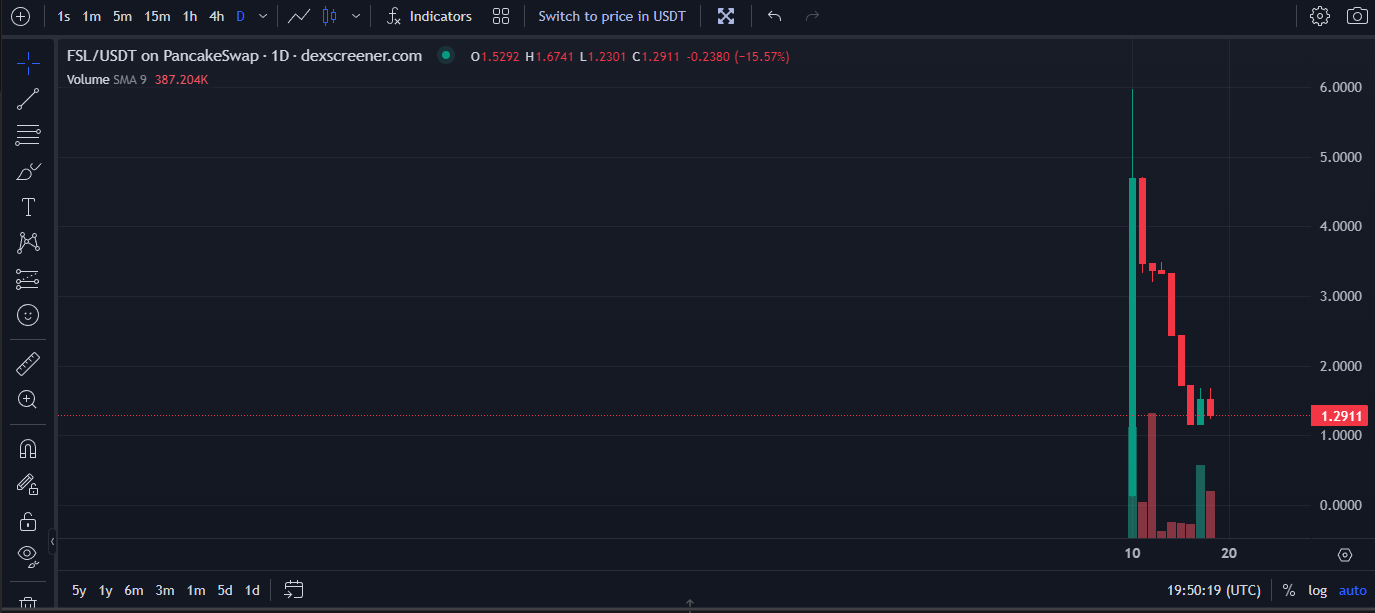
FSL prices suddenly declined to near zero between 4:30 and 5 pm on October 10. Source: DEX Screener.
The two events appear to have occurred between 4:25 pm and 4:35 pm UTC on Oct. 10, which may explain the sudden price decline. At 4:25 pm, the FSL deployer account transferred the remaining 97 million FSL to another address. At 4:35 pm, this account sold all 97 million tokens into the liquidity pool, moving $1.6 million worth of Binance-pegged USDT from the liquidity pool into this account. This sale represented 32.33x the amount of FSL coins that had previously been circulating. This account subsequently transferred the drained funds to Tornado Cash through a series of transactions.
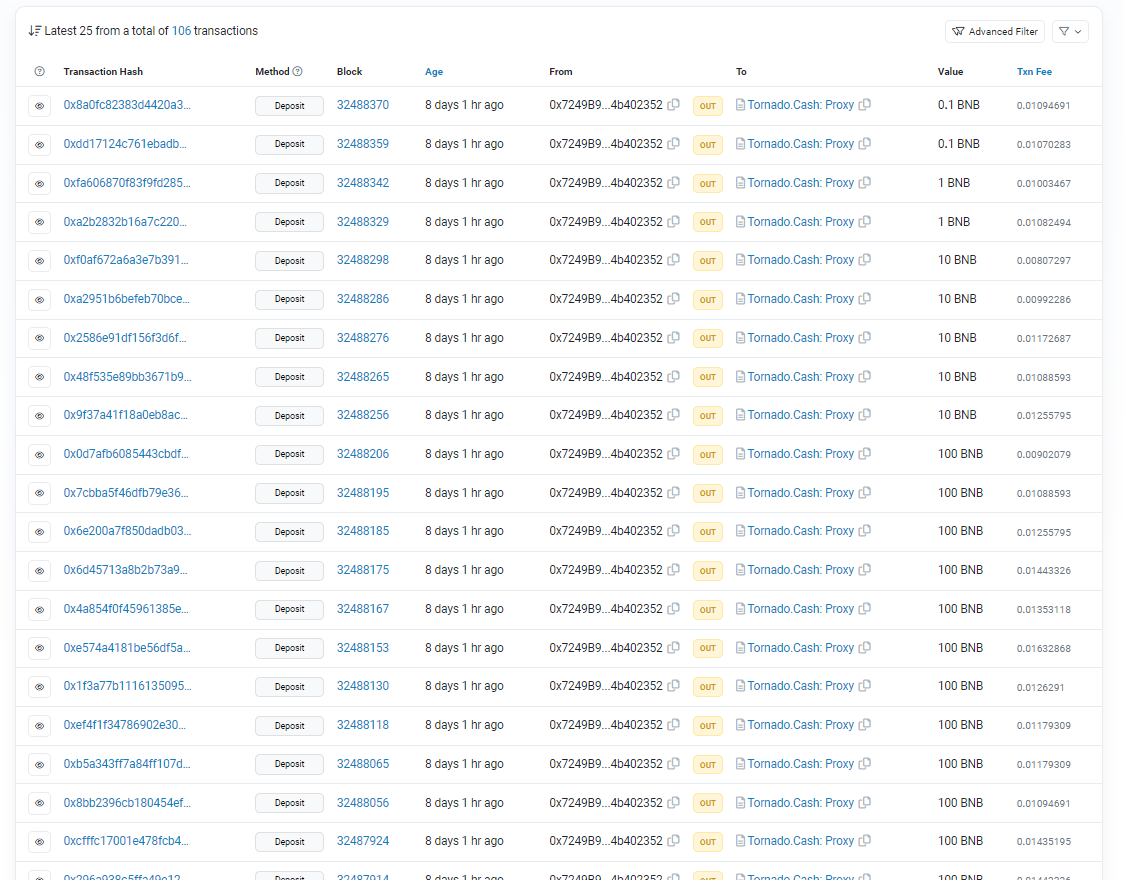
FSL attacker depositing funds to Tornado Cash. Source: BSCScan.
According to CertiK, the Standard Cross Finance team has managed to convince investors to once again invest in its project, despite twice draining funds from investors. It has now relaunched FSL with a new token contract. At the time of writing, DEX Screener shows that the new version of FSL is valued at $1.29 per coin.
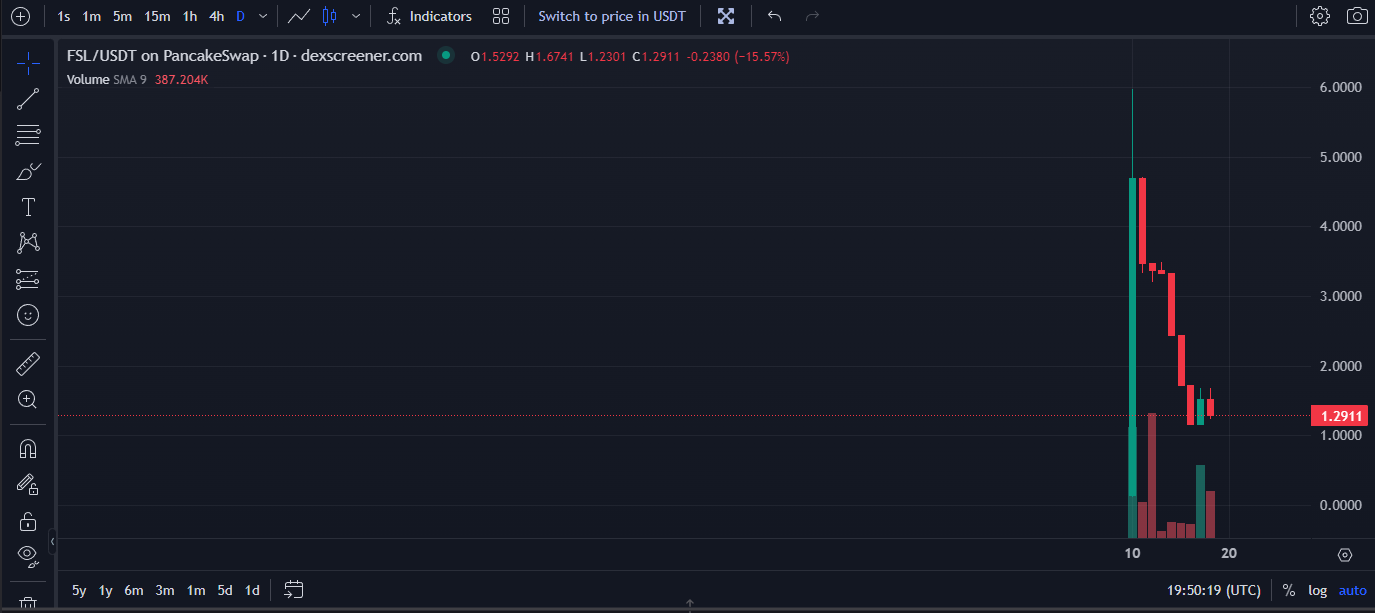
Finsoul (FSL) “V2” price. Source: DEX Screener.
Cointelegraph contacted the Standard Cross Finance team but did not receive a response by the time of publication.
The story of FinSoul serves as a cautionary reminder that crypto investors should investigate new projects before committing funds to them. If CertiK’s report is to be believed, it implies that a scam team was able to trick investors, not just once, but twice, and is currently attempting a third fraud. Investors should remember to exercise due diligence before investing in projects that do not have a functioning blockchain project.
Related: Pond0x DEX claims $100M in trading volume as critics allege it’s a scam
“Rug pulls,” or exit scams, have posed a continuing problem in the world of decentralized finance. Arbitrum-based protocol Xirtam allegedly stole over $3 million from investors using a token sale over the summer. In this instance, Binance managed to freeze the funds and return them to users via a smart contract beginning on Sept. 6.
However, most rug-pull victims are not so lucky. In June, DeFi project Chibi Finance removed over $1 million of its users’ funds through a “panic” function, and these funds have yet to be recovered. In 2021, the PopcornSwap exit scam resulted in over $11 million in losses to investors and led to criticism of the BNB Chain development team that still continues to this day.
Collect this article as an NFT to preserve this moment in history and show your support for independent journalism in the crypto space.