
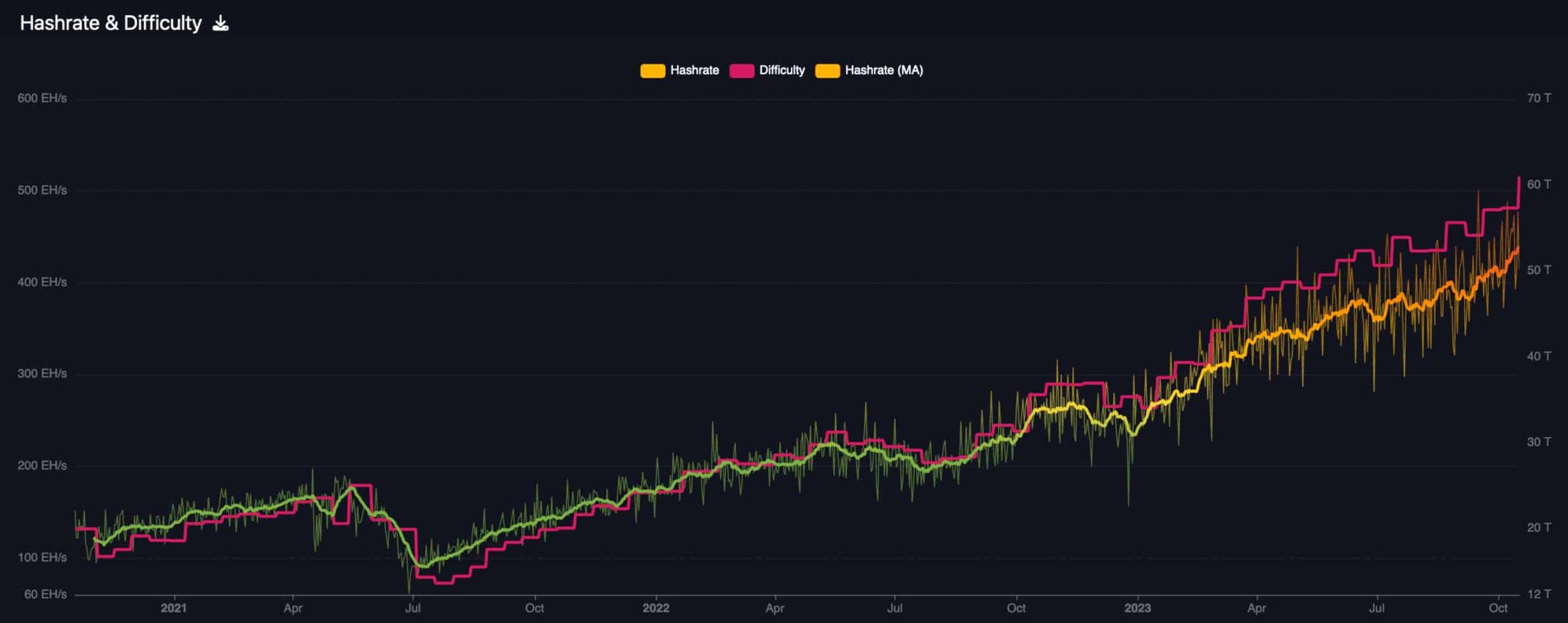
Bitcoin (BTC) miners are constantly generating Proof of Work (PoW) in a highly competitive business to discover the next valid block. Recently, Bitcoin mining difficulty was adjusted to its all-time highs, which hardened the competition and business profitability.
In this discovery, the miner gets the right to collect the block subsidy of freshly created 6.25 BTC, add Bitcoin transactions to this block, and broadcast it to other nodes, confirming these transactions — including the one from the block subsidy.
Interestingly, the more work (or hashrate) a Bitcoin miner has on the network, the higher their chances of finding a valid block. In order to keep the block discovery in a 10-minute interval, the Bitcoin mining difficulty is adjusted every 2,016 blocks (around two weeks).
This creates a dynamic where in an increased hashrate environment, the protocol will require that even more hashrate is deployed in order to find the next block, making it more difficult to mine BTC. While a decreasing hashrate scenario will do the opposite, decreasing the mining difficulty.
Bitcoin mining difficulty reaches a new all-time high of 61.03 trillion hashes
In particular, the Bitcoin mining difficulty reached a new all-time high of 61.03 trillion hashes needed to mine a block, in the most recent difficulty adjustment on October 16.
Meanwhile, the current average daily network hashrate is at 450 EH/s, according to data retrieved by Finbold from mempool.space on October 17.
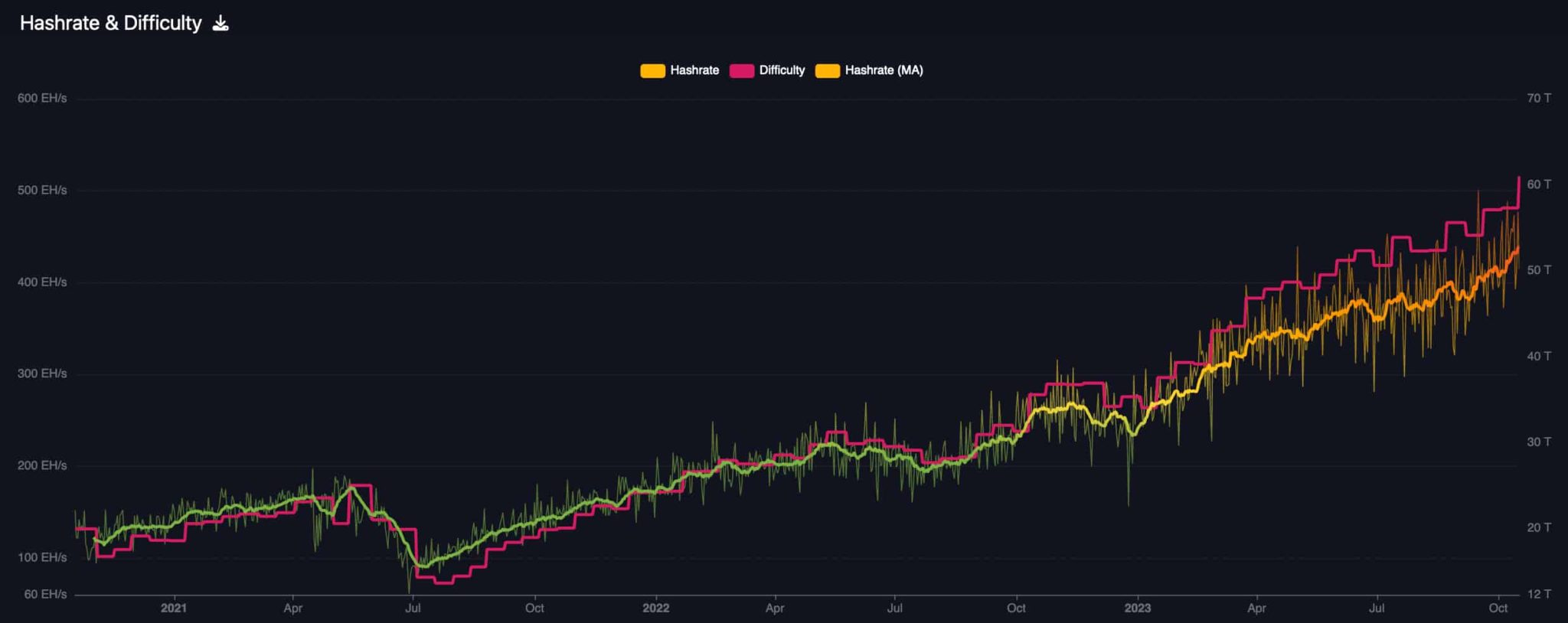
Notably, Bitcoin mining is becoming more difficult over time, as the largest pools continuously increase their hashrates — which also makes Bitcoin more centralized in a few mining pools, as exclusively reported by Finbold.
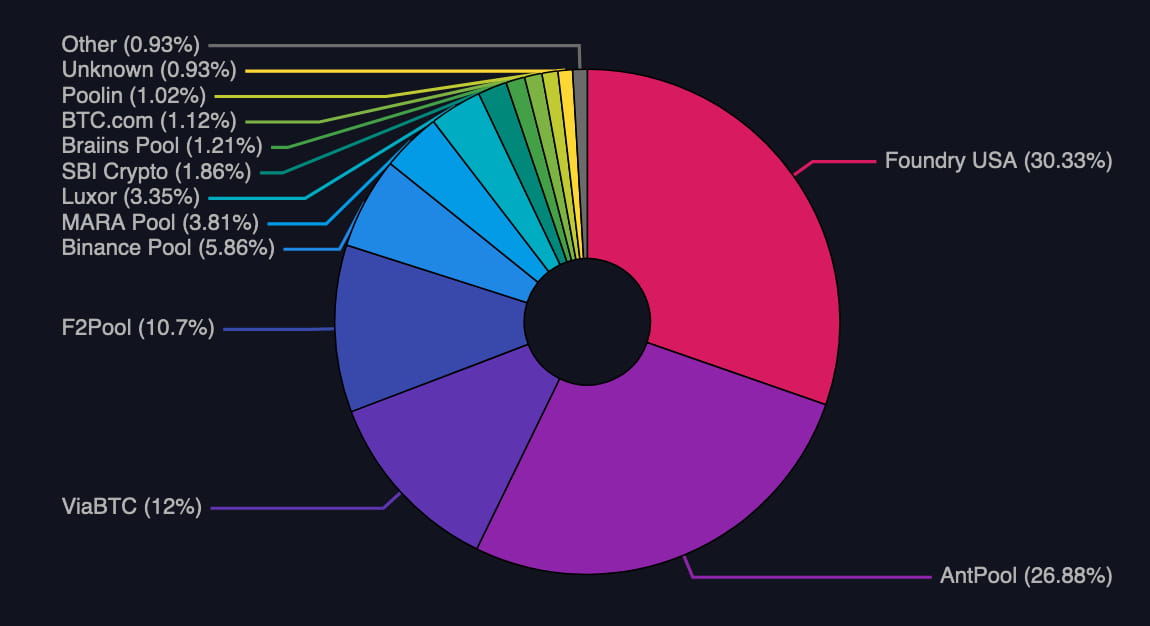
Additionally, part of this recent growing hashrate comes from AntPool, the second-largest Bitcoin mining pool fighting against Foundry USA to become the first in block discovery. Antpool is owned by Bitmain, the largest Bitcoin mining ASICs producer in the world, based in China.
Bitmain fired three of its employees on October 17, involved in disclosing their salaries to the public. The company had salary arrears, and the 2022 year-end bonus has not been paid yet, according to a report by BlockBeats.
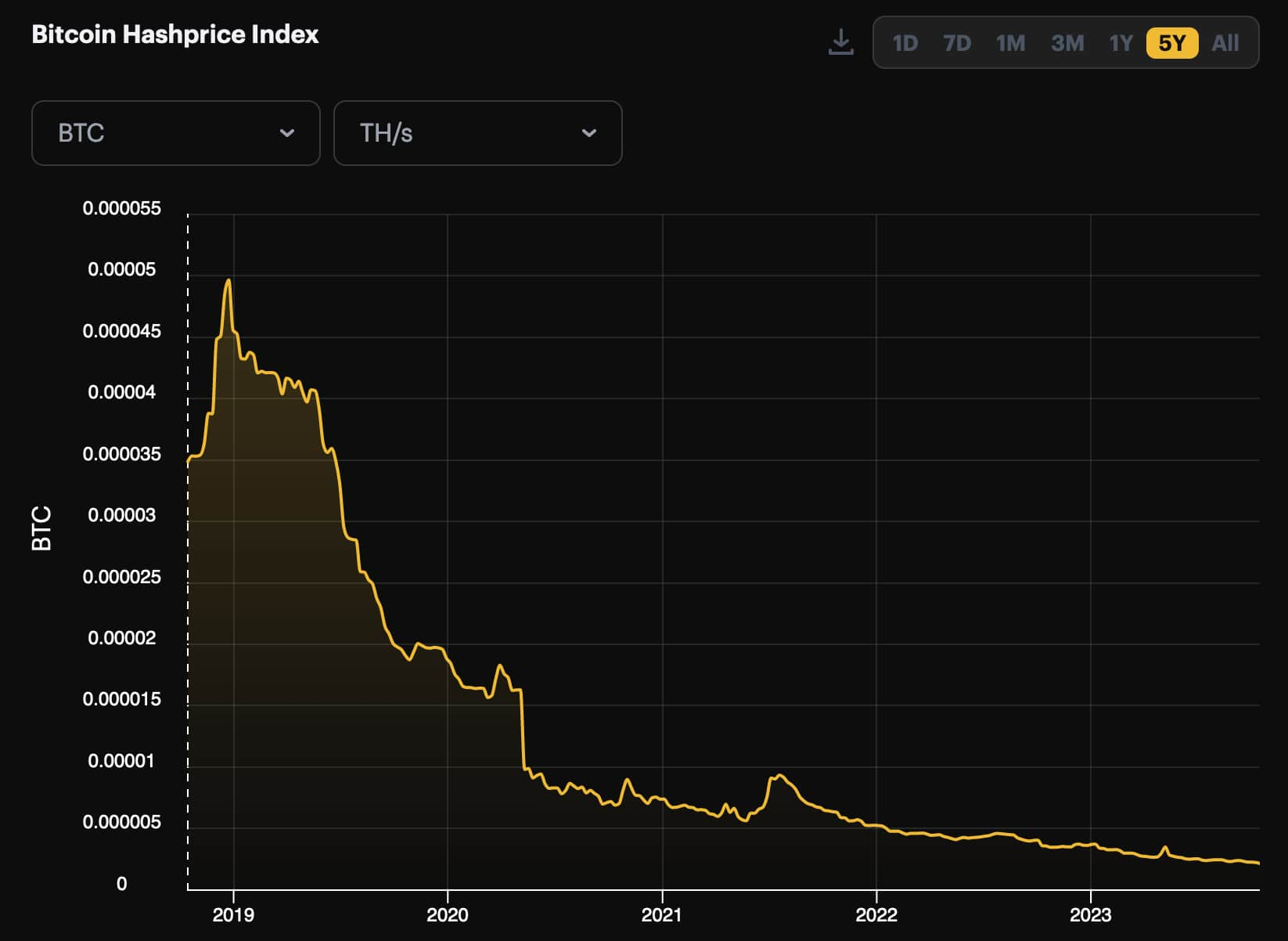
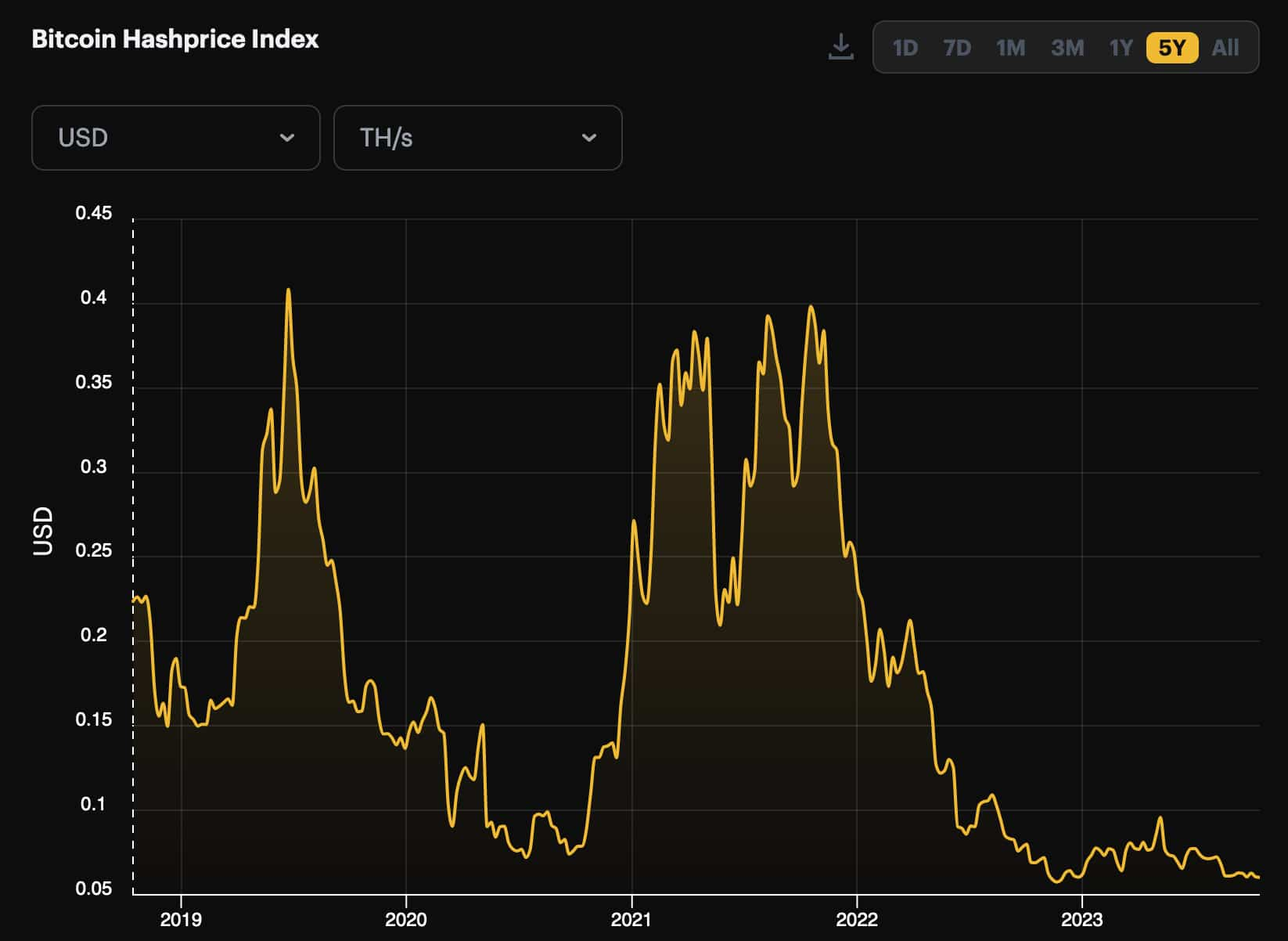
Hashprice measures the expected return in BTC for each TH/s of PoW (or hashrate) a Bitcoin miner contributes to the network. It can also be used to measure the value in U.S. Dollars (USD), which is volatile due to considering the Bitcoin price in dollars.
Particularly, the Hashprice Index in USD has reached a 5-year low in November 2022, due to what is now considered the local bottom for this Bitcoin market cycle.
Nevertheless, the index is revisiting its lowest values after the constant increase in mining difficulty, at $0.06 per TH/s daily, and Bitcoin miners are again underwater.
This scenario creates more challenges for Bitcoin miners trying to compete in the mining industry and favors the already largest players or the ones with easier access to capital, ASICs, or cheap energy.