
In the past years, it has been possible to observe a gradual, but constant trend of fewer Bitcoin (BTC) mining pools dominating the majority of the global network hashrate and block discovery. In this report, Finbold uses a data-based approach to analyze the decentralization state of the leading cryptocurrency network and explains why it is important.
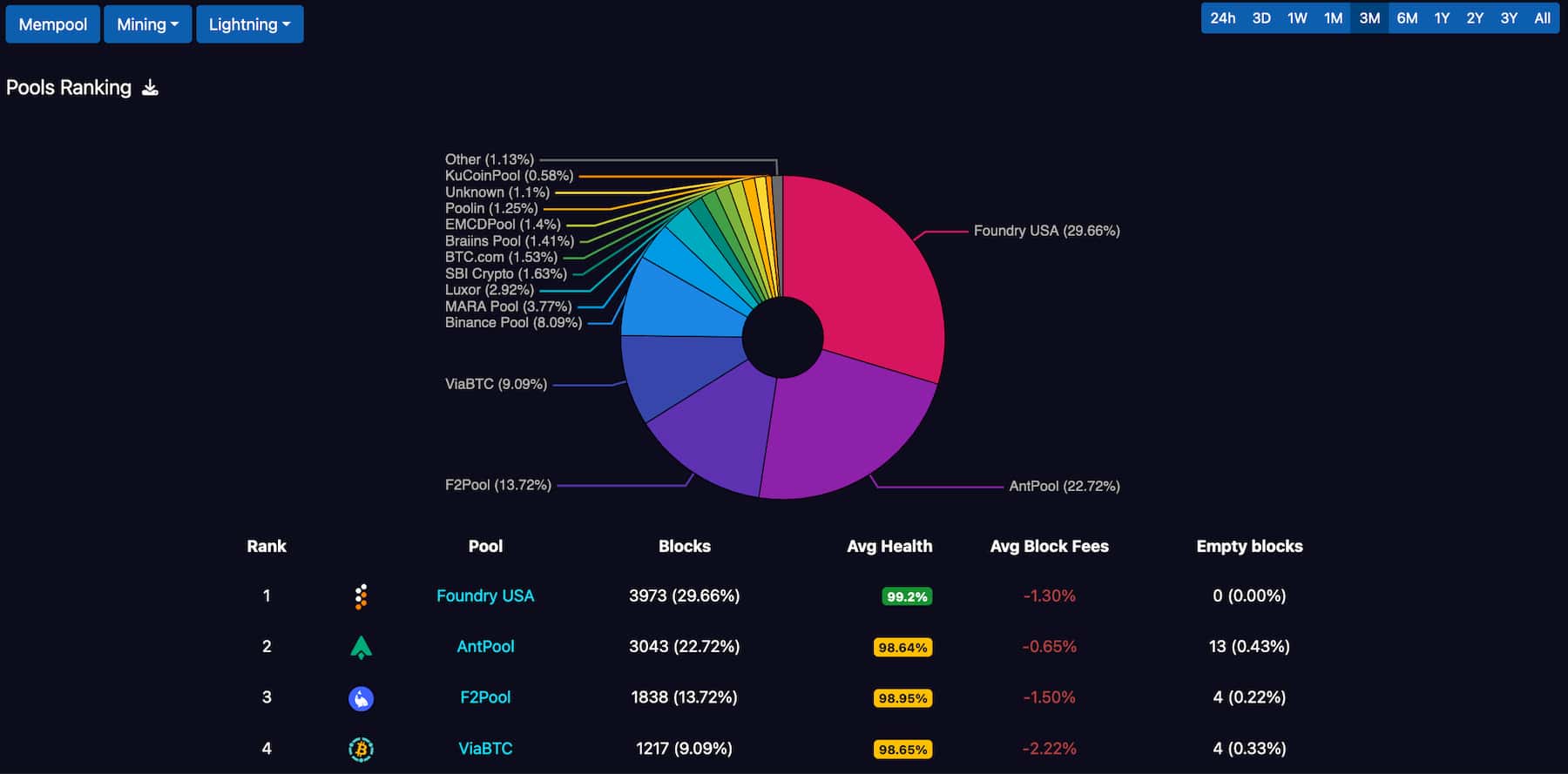
Going from an unknown number of Bitcoin miners having the majority of its hashrate since the first block was mined by Satoshi Nakamoto, to four mining pools having mined over 59% of all blocks in the last three years, and only two of these institutions dominating over 52% of the new BTC distribution in the last three months.
Bitcoin mining decentralization state
This data was gathered from mempool.space pools ranking, which analyses the hashrate dominance by looking at who was responsible for each block ever added to the Bitcoin blockchain in each timeframe. Consequently receiving the reward in BTC through the creation of new coins — until the maximum limit of 21 million is achieved in the next 120 years (approximately).
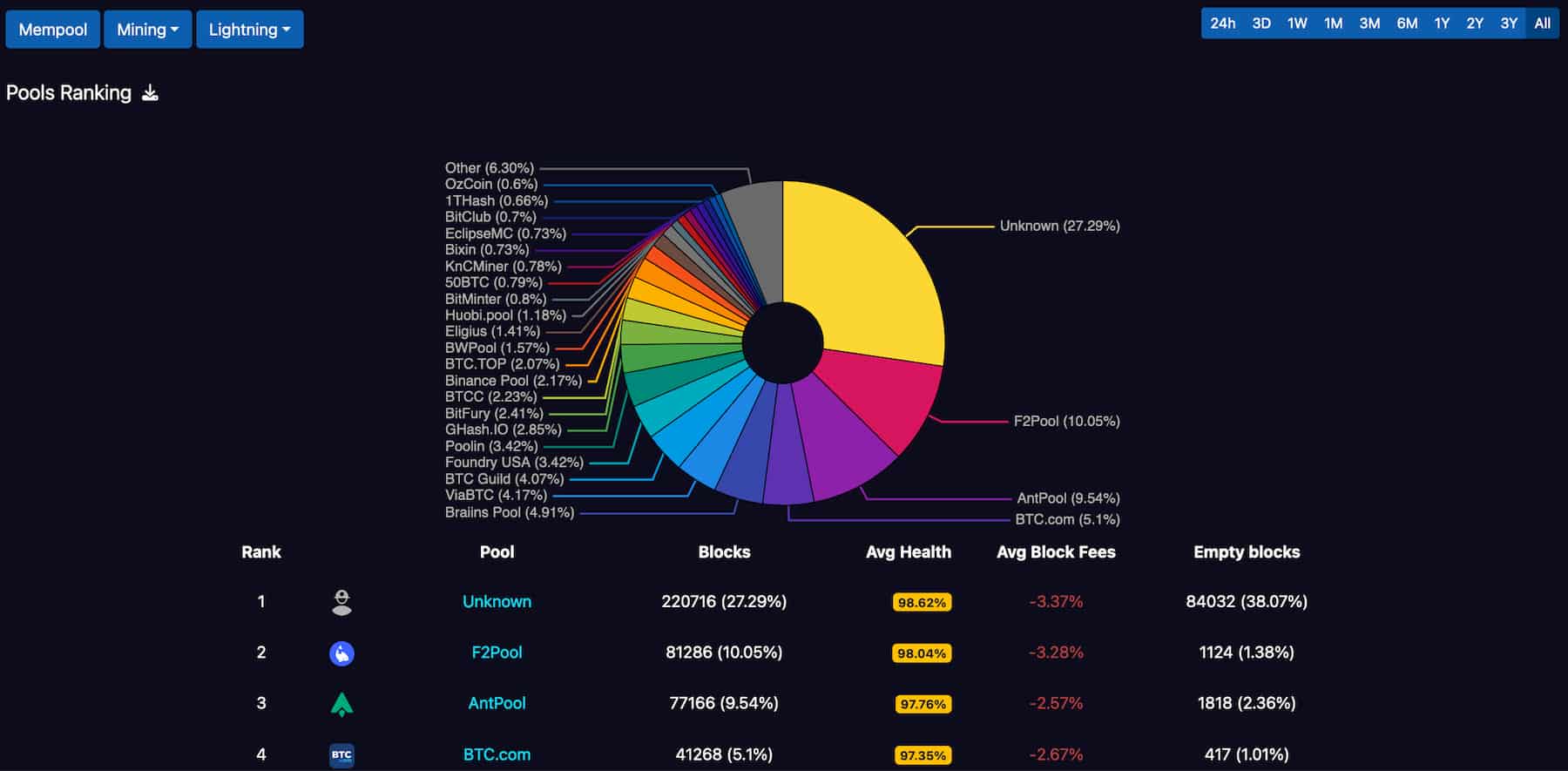
All-time Bitcoin blocks discovery
At the time of publication, a total of 808987 Bitcoin blocks were mined and added to the blockchain. Resulting in a total of 19,493,656 BTC being distributed to each of the lucky miners (or mining pools) that discovered each of these blocks by providing Proof of Work (PoW) through hash calculations.
Interestingly, from these 808,987 blocks, 220,716 (27.29%) were mined by unknown entities — mostly in the early days of the network, probably by individual and domestic miners, or yet unidentified mining companies.
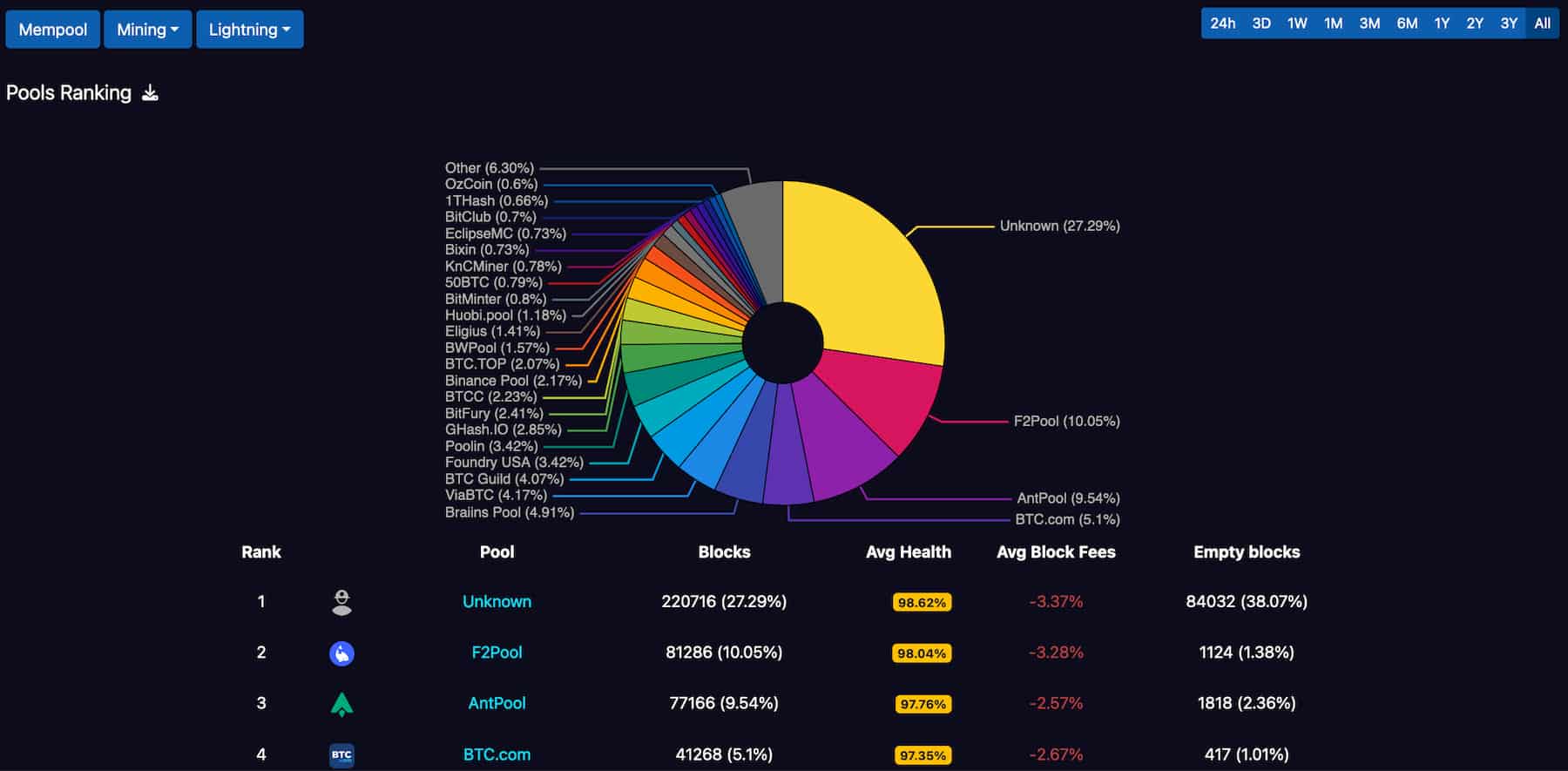
3-year Bitcoin global hashrate decentralization
However, the scenario starts to change as Bitcoin becomes more recognized and the industry matures. Bitcoin miners — looking for more predictability in a highly competitive ‘winner takes all’ activity — started to unite forces (or hashrates) in mining pools. Effectively increasing their chance to mine a valid block and share the block reward.
This drastically changed the network’s decentralization state as seen in the last 3 years’ results, with only four pools providing over 59% of the global hashrate:
- Foundry USA (17.36%)
- AntPool (16.39%)
- F2Pool (15%)
- Binance Pool (10.36%)
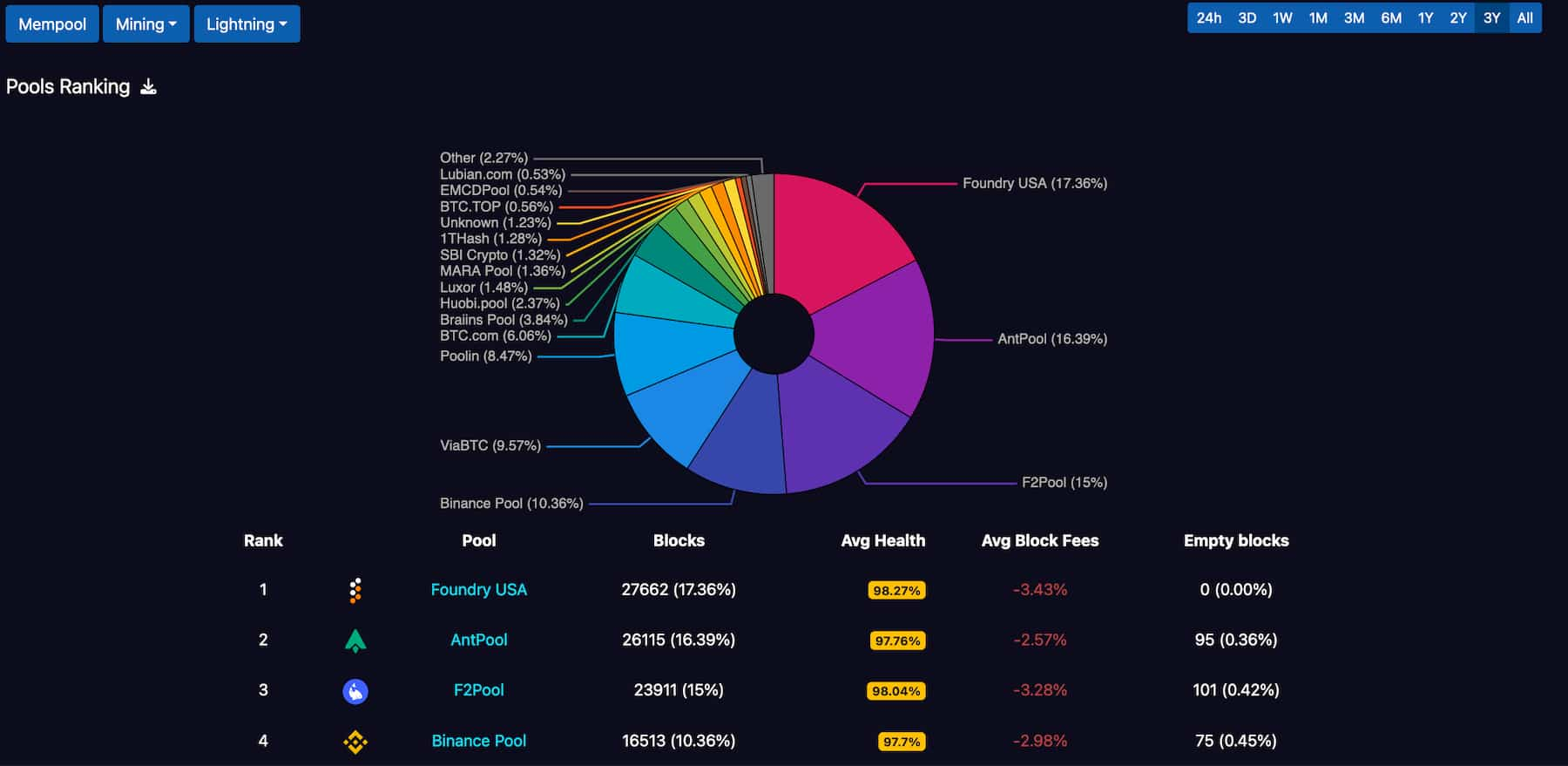
3-month BTC new supply distribution
Notably, the trend continues as time goes by. Bitcoin domestic mining is not feasible anymore, smaller companies are not able to survive while operating underwater, and the remaining survivors get more concentrated in fewer pools for even higher revenue predictability.
In the last three months, only two mining pools received more than half of all the Bitcoin supply distribution which is set as 6.25 BTC per mined block — that happens on average every 10 minutes, for around 900 BTC/day.
Foundry USA received around 24,831.25 BTC for mining 3,973 blocks (29.66%), while AntPool received around 19,018.75 BTC for mining 3,043 blocks (22.72%). This results in a total of 43,850 BTC accrued by these pools in the last 90 days, equal to $1.16 billion considering Bitcoin is priced at $26.500 by press time.
Why is Bitcoin PoW decentralization important?
Proof of Work decentralization is important from both a financial and technical security point of view.
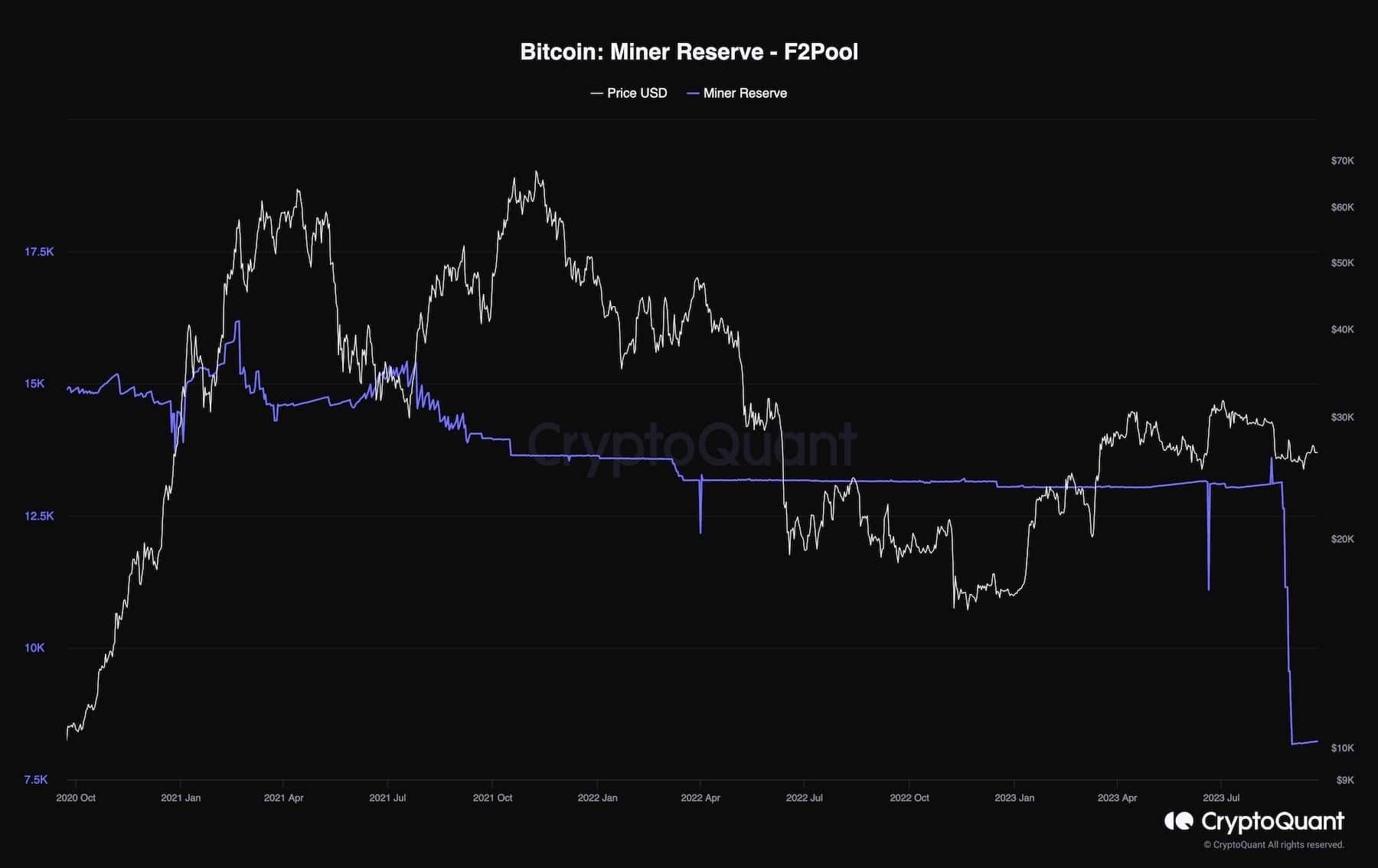
A more decentralized Bitcoin distribution helps avoid market price manipulation, which can happen when fewer entities hold a larger share of the supply or exchanged volume. It also diminishes the effect of a single entity sell-off, as seen recently by F2Pool — currently the third largest mining pool.
Moreover, a more decentralized network also means that it is harder for a malicious entity to take over the consensus, which could, theoretically, allow for double spending through a 51% attack — when someone spends the same coin twice, like using a fake US dollar.
Although Bitcoin mining pools function with the collaborative work of multiple mining companies or individual miners, these contributors are only providing work through hash calculations. It is the pool coordinator who adds transactions to the block template, signs and broadcasts the block to the network, and receives the block reward to be distributed later among the miners.
All things considered, the more decentralized cryptocurrencies’ networks are, the more secure and valuable they can become long-term.