
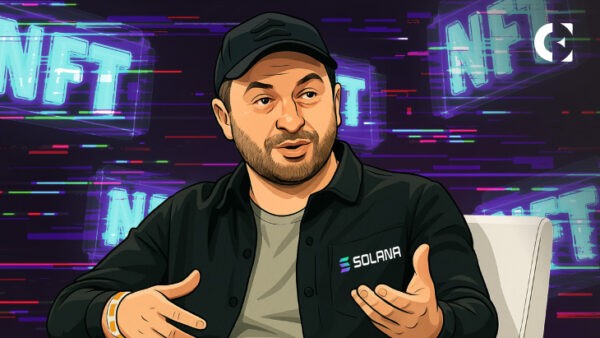
Solana co-founder Anatoly Yakovenko is pushing a new architecture for stablecoins that would sharply limit who can freeze funds at the base layer. In his view, a foundational dollar stablecoin should only be frozen with court authorization, not through discretionary action by private issuers or other off-chain decision-makers.
The proposal comes as the crypto industry continues debating how centralized stablecoin issuers should respond to hacks, exploits, and emergency fund movements. Toly’s argument distinguishes between legal finality and operational flexibility.
He wants the underlying asset to behave more like money under a formal legal system, while higher-level DeFi products handle faster risk responses.
Toly Draws a Hard Line on Freeze Authority
Toly’s central point is simple. If a stablecoin can be frozen by someone other than a judge acting under proper legal authority, then it does not fully function as a true dollar instrument. He argues that the base layer should not rely on broad administrative discretion.
That view challenges one of the defining features of many centralized stablecoins. Issuers often retain the power to freeze addresses in response to hacks, sanctions, compliance issues, or law enforcement requests. Toly is not saying risk controls should disappear. He is saying they should move away from the base token itself.
Wrapper Stablecoins Could Handle DeFi Risks
His proposed solution is a layered design. A base stablecoin would remain legally strict and only respond to court-approved orders. On top of that, protocols such as lending or trading platforms could issue wrapped versions with their freezing and unfreezing rules.
In that setup, each team would build its own vault-level security policy. One protocol could move quickly after a hack. Another could require a multi-party review. A third could design automated containment tools. The key distinction is that these controls would sit above the base stablecoin rather than inside it.
That structure would let DeFi teams respond faster to operational threats without redefining the legal nature of the underlying dollar asset. It would also create competition over how protocols manage security, recovery, and user protection.
Debate Follows Questions Around Stablecoin Controls
The timing reflects wider industry tension over centralized freeze mechanisms. Recent debate intensified after questions emerged over how quickly a major stablecoin issuer should act after a protocol exploit. That discussion brought renewed attention to the tradeoff between user protection, legal process, and issuer discretion.
Toly’s comments place him on the side of a cleaner separation. He wants the base layer to stay legally constrained and the protocol layer to stay operationally adaptive. That would give DeFi builders room to create different response models while keeping the underlying asset closer to what he sees as a court-governed digital dollar.
Related: Solana Price Prediction: SOL Tests $82.50 Fib As Treasury Stocks Crater And ETF Inflows Return