
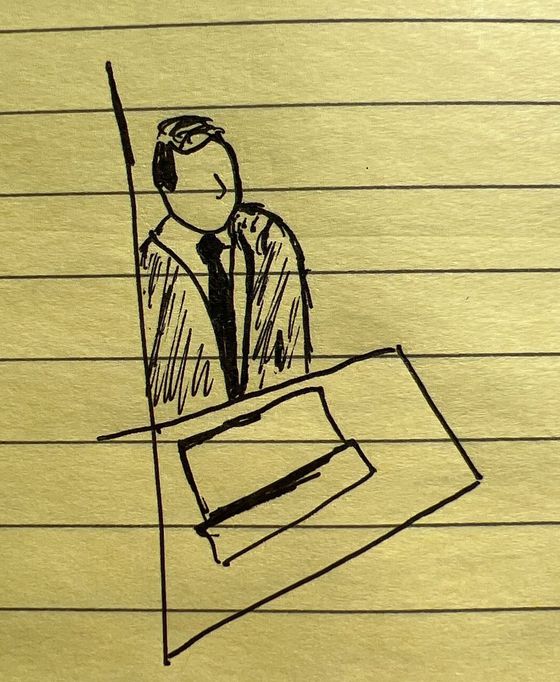
NEW YORK — While cross-examining witness for the prosecution Caroline Ellison, Sam Bankman-Fried’s lawyer hinted he would again try to pin the blame for the collapse of FTX and Alameda Research on her.
In the first hour of testimony Thursday morning in the trial of Bankman-Fried, defense counsel Mark Cohen asked Ellison if it was true that his client was absent for “long periods of time” while she was CEO at Alameda. She said it was.
He also asked if during those times, Ellison and Sam Trabucco, who at one point was her co-CEO, made decisions without Bankman-Fried’s input. She acknowledged they did.
This developing story will be updated frequently throughout the day.
Thursday is the third straight day of testimony for Ellison, 28, who sported the same gray blazer that she had worn the last two days.
Ellison, who is Bankman-Fried’s ex-girlfriend and a star witness in the U.S. Department of Justice’s case again the FTX founder, described her early days at Alameda and some of FTX’s internal accounting.
Alameda engaged with a few accountants in 2021 to 2022, but after those firms reviewed Alameda’s books, “they found they couldn’t or wouldn’t do it,” Ellison said, as she faced questions from Cohen. Former FTX Digital Markets CEO Ryan Salame initially prepared Alameda’s balance sheets, but at some point, Ellison took over this task, she testified.
Cohen also asked about Ellison’s early days at Alameda and disputes among multiple employees at the company that happened before she joined in 2018. Neither Cohen nor Ellison said more about the disputes besides her acknowledging she had heard about them. It is unclear what Cohen was referring to.
The defense counsel also asked Ellison if she was an ambitious person. While she said she didn’t consider herself to be an ambitious person early in her career, she recalled being more driven during her time at Alameda.
“I became more ambitious as Sam encouraged me in that,” she said.
Defense strategy
Previously, Cohen had argued Ellison is the one responsible for the FTX exchange’s dramatic collapse last year.
“Bankman-Fried relied on Ellison and he trusted her to act as the CEO and manage the day-to-day,” Cohen said in his opening statement last week. “… As the majority owner of Alameda, he spoke to Ms. Ellison, the CEO, and he urged her to put on a hedge, something that would protect against such a downturn. She didn’t do so at the time, and this also becomes an issue later on, when the storm hit.”
Prosecutor Danielle Sassoon pushed back against that narrative in her direct questions to Ellison, walking the former trader through her conversations with Bankman-Fried about Alameda’s financial position over the years before FTX’s collapse. The two spent quite a bit of time discussing an analysis Ellison put together of Alameda’s financials in response to Bankman-Fried saying he wanted to invest in more venture projects. Ellison said she recommended against doing so, but Bankman-Fried announced new venture investments in January 2022 anyway.
Months later, Bankman-Fried blamed her for not hedging Alameda’s risks, Ellison said.
While Ellison “absolutely could and should” have hedged Alameda’s risks earlier in the year, the problem was that Bankman-Fried had decided to make a number of investments that put Alameda into an unsound financial situation, she said.
“I thought that hedging could have helped our situation, but I felt that the fundamental reason we were in the situation was that we had borrowed these billions of dollars in open-term loans and used them for illiquid investments,” she said, and Bankman-Fried had made the decision to make those investments.
Read all of CoinDesk’s coverage here.