
The British government wants to turn London into a global blockchain hub. Yet the restrictive cryptocurrency policies of major banks appear to contradict these ambitions, according to a recent report by crypto tax software provider Recap.
The report shows that banks’ risk-averse approach has led to a blanket ban on crypto transactions, with consequences for both companies and individual investors.
According to Recap’s survey, 38% of crypto investors have switched banks due to difficulties trading digital assets, while another 22% are considering doing so.
Su Carpenter, Operations Director at CryptoUK, told Recap:
“The blanket ban on transactions from account holders to crypto exchanges is completely at odds with the government’s ambitions for Britain to become a global crypto hub.”
In addition, companies are being forced to use foreign providers, which is negatively impacting Britain’s ability to attract organizations and talent.
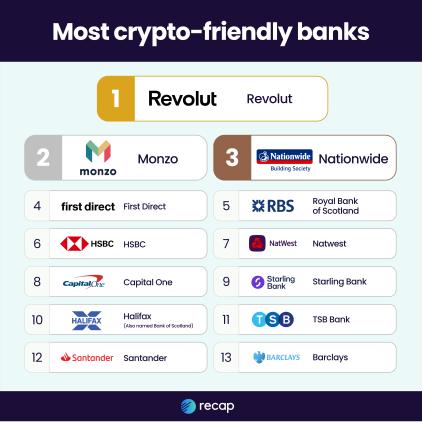
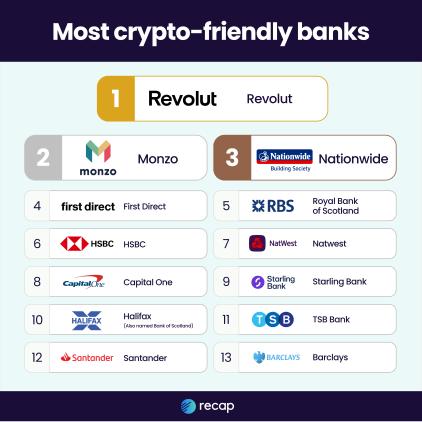
Most crypto-friendly bank in Great Britain.
Summary named Revolut the most cryptocurrency-friendly bank, as it is the only one that enables mobile banking transactions while offering educational tools to customers. Meanwhile, banks like HSBC and Natwest have introduced strict limits, allowing only £2,500-£5,000 worth of crypto purchases per month, according to Recap’s findings.
Summary of the criteria for a ‘crypto-friendly bank‘ is as follows:
- Allow customers to transfer funds to centralized cryptocurrency exchanges.
- Empower customers to buy, sell and hold digital assets directly.
- Have a broader limit on how much you can withdraw and deposit into your account.
- Allow users to purchase cryptocurrency with a debit or credit card.
Older institutions appear to be struggling to adapt amid the disruption caused by blockchain technology. If Britain is to thrive as a global crypto leader, regulators must create a level playing field for investors while ensuring compliance, the report said.
Finding the ideal balance requires input from both the business community and government. However, Recap argues that progress depends on regulators intervening to enforce the necessary changes in the banking industry, as voluntary involvement faces roadblocks. The tax software provider also highlights how restrictive crypto services and regulations could impact individuals’ ability to organize taxes due to issues accessing accounts.