
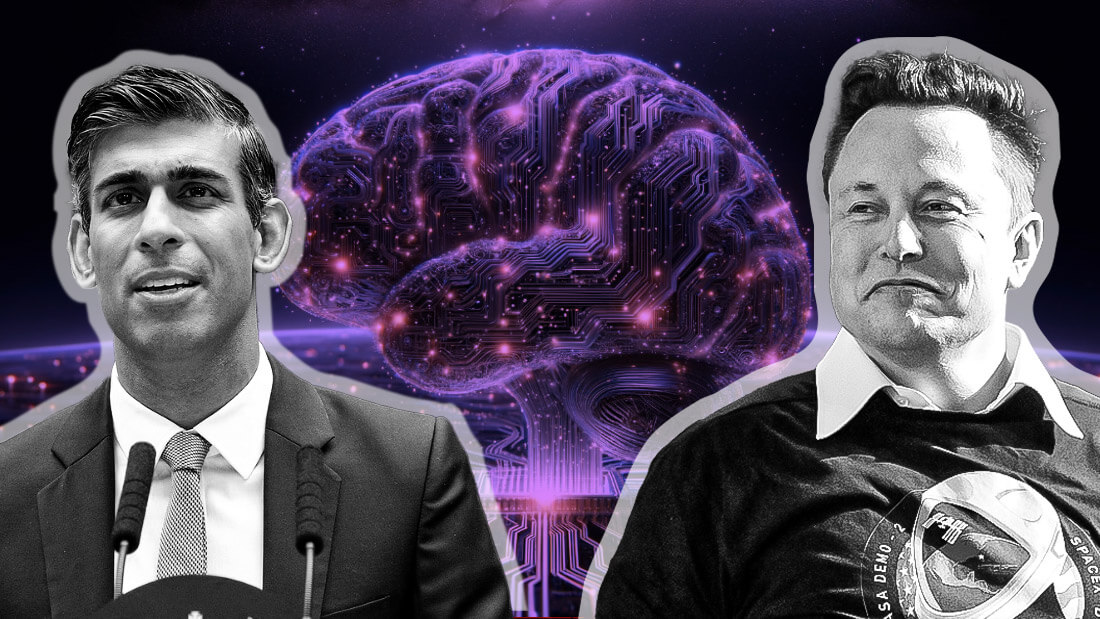
British Prime Minister Rishi Sunak interviewed Elon Musk at a recent AI safety summit hosted by the UK government. The conversation focused on the opportunities and risks of artificial intelligence.
Musk has long talked about regulating AI development to ensure safety. He told Sunak that AI capabilities are increasing exponentially, with systems able to generate convincing fake videos and pass captcha tests. Musk reiterated his belief that general artificial intelligence will likely surpass human levels in the near future.
Both Sunak and Musk agreed that governments have a role to play in regulating AI, with Musk likening this to having a referee in sport. However, Musk noted that the government could struggle to keep up with the pace of AI progress. He suggested that transparency and oversight, even without initial strict regulations, would help ensure safety.
As for the social impact of AI, Musk predicted that while automation could make many jobs meaningless, an “age of abundance” could give people everything they want. Musk and Sunak discussed how finding meaning and job satisfaction in such a context could be challenging.
In terms of current AI applications, Musk cited improvements in customer service, education through individually tailored AI tutors, and even companionship as short-term benefits. However, he warned that humanoid robots could pose safety risks without local shutdown options.
To counter the risks of AI disinformation, Musk proposed minimum social media subscription fees to increase the cost of bots. Sunak outlined the UK’s efforts to build security testing capabilities and highlighted the urgency of tackling deep fakes as elections draw closer worldwide.
Overall, Musk made the optimistic observation that AI, with thoughtful safeguards, has the potential to improve human lives. The conversation showed that government and technology leaders are aligned on maximizing the benefits of AI and mitigating the risks.
To highlight the power and speed at which AI is currently developing, you can watch a 14-minute shortened version of the hour-long interview in Descript, edited in 3 clicks using AI. here.