
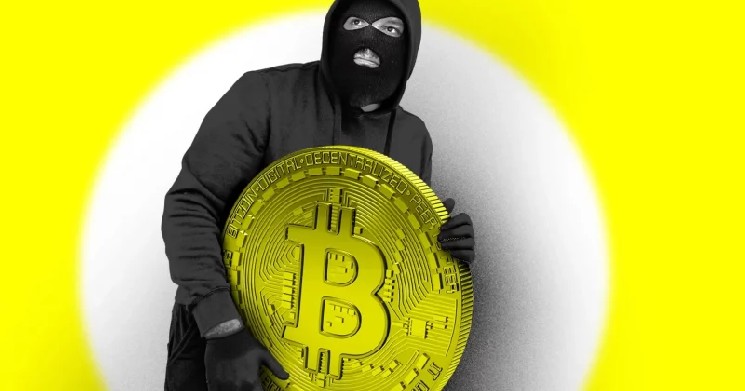
The FBI did something unusual, even by federal law enforcement standards. It created its own cryptocurrency token, gave it a legitimate-sounding name, and used it as bait to catch market manipulators in the act. The operation worked.
The sting, dubbed Operation Token Mirrors, has led to criminal charges against 18 individuals and entities accused of wash trading and artificially inflating trading volumes in the crypto market. Federal authorities also seized more than $25M in digital assets connected to the alleged schemes.
How a fake token caught real criminals
The centerpiece of the operation was NexFundAI, a token that looked and functioned like any other crypto project. Except it was entirely controlled by the FBI.
Think of it like a bait car, but for crypto. Law enforcement didn’t just sit back and wait for fraud to happen. They built the trap from scratch, then watched as suspected manipulators showed up to do what they apparently do best: fake the numbers.
The core allegation is wash trading, a practice where a trader (or coordinated group of traders) simultaneously buys and sells the same asset to create the illusion of market activity. In English: they’re trading with themselves to make a token look more popular than it actually is. The inflated volume tricks real investors into thinking there’s genuine demand, which can drive up prices and create exit opportunities for the manipulators.
By deploying NexFundAI as an undercover tool, agents were able to directly engage with the suspected market manipulators. The token served as a magnet, attracting the exact kind of actors federal prosecutors were targeting. Conversations, transactions, and coordination patterns were all captured as evidence.
It’s a remarkably proactive approach. Rather than piecing together fraud after the fact through blockchain analysis and subpoenas, the FBI essentially set up a storefront and let the criminals walk through the door.
The scale of the problem
Eighteen defendants is a significant haul for a single operation, and the $25M in seized digital assets suggests these weren’t small-time operators running bots from a basement.
Wash trading has been one of crypto’s open secrets for years. Academic studies and independent research firms have repeatedly flagged that a substantial portion of reported trading volume on many exchanges is fabricated. The practice distorts market signals, misleads retail investors, and undermines the credibility of the entire asset class.
What makes Operation Token Mirrors notable isn’t just the number of arrests. It’s the method. Federal agencies have historically struggled to keep pace with the speed and complexity of crypto markets. Investigations tend to be reactive, launched after a rug pull or exchange collapse has already caused damage. This operation flipped that script entirely.
The FBI essentially became a market participant, which raises interesting questions about the boundaries of undercover operations in financial markets. But the legal framework for this kind of sting is well-established in other contexts, from drug buys to bribery cases. Applying it to crypto market manipulation is a natural, if somewhat creative, extension.
What this means for crypto investors
Here’s the thing. Operation Token Mirrors sends a clear signal that federal law enforcement is getting more sophisticated in how it polices digital asset markets. The days of assuming that crypto’s complexity provides cover for manipulation are fading.
For legitimate market makers and trading firms, the operation is a reminder that the line between providing liquidity and manufacturing fake volume is one that prosecutors are increasingly willing to scrutinize. The distinction matters: legitimate market making involves posting real bids and offers that carry actual risk. Wash trading involves no risk because the same entity sits on both sides of the trade.
For retail investors, the takeaway is both cautionary and somewhat reassuring. Cautionary because the existence of this operation confirms that the fake volume problem is serious enough to warrant a dedicated FBI sting. Reassuring because it demonstrates that enforcement agencies are no longer content to play catch-up.
The seized $25M in digital assets also represents a tangible consequence. In past crypto enforcement actions, actually recovering funds has been one of the hardest parts. The fact that authorities were embedded in the scheme from the beginning likely made asset recovery significantly easier than it would be in a conventional investigation.
Look, the crypto industry has spent years asking for legitimacy and institutional acceptance. Operations like this are part of what that actually looks like. Legitimate markets require enforcement, and enforcement requires tools. The FBI just demonstrated it has a new one, and it’s willing to build an entire fake token to use it. Market manipulators now have to consider the possibility that the next hot new project sliding into their inbox might be operated by a federal agent. That’s a powerful deterrent, even beyond the 18 people currently facing charges.