

Altura, a decentralized finance protocol founded by former Fidelity and PwC staff, is launching an onchain gold arbitrage strategy aimed at retail investors, targeting annualized returns of 20%, according to a Thursday press release shared with Cointelegraph.
According to Altura, the product pools user deposits into a vault that recycles capital through short-term transactions in physical gold. Unlike platforms like Robinhood or Revolut that offer passive exposure to the gold price, Altura claims to tokenize the underlying arbitrage process itself.
The company says it has raised $4 million in financing and has already facilitated the movement of approximately 185 kilograms of gold, representing approximately $28.5 million in cumulative transaction volume, according to the release.
Matthew Pinnock, co-founder and chief operating officer of Altura, told Cointelegraph that the goal is to “bring an institutional-style gold strategy on-chain in a way that retail investors can actually access.”
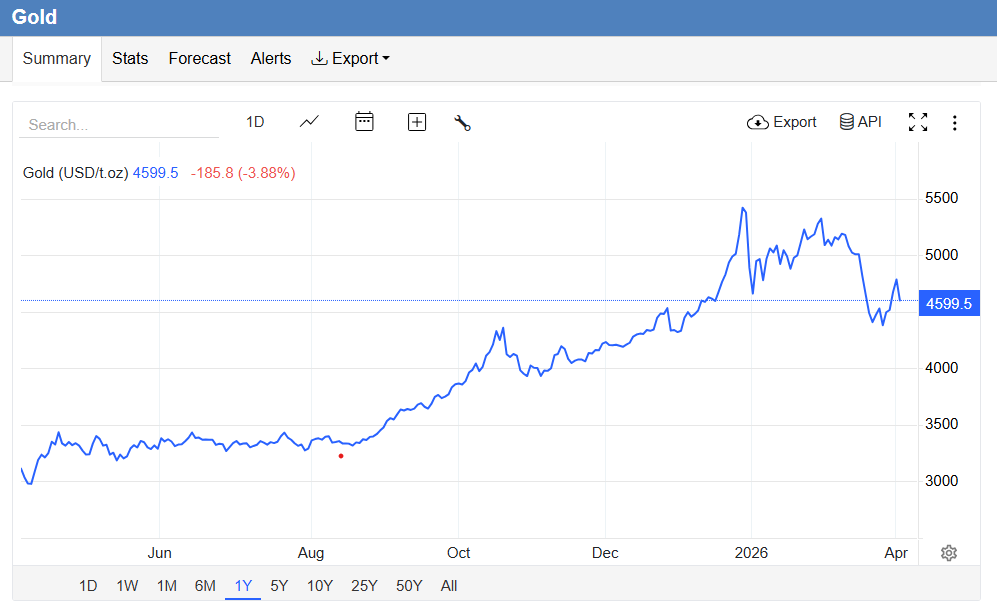
The launch comes as gold is trading near record levels on the spot market, having soared to a record high of more than $5,300 an ounce in January, although the price has since retreated sharply. Altura’s launch signals a new phase in tokenized real-world assets, where projects no longer just provide passive exposure to commodities, but seek to package institutional trading strategies as onchain DeFi yield products for retail users.
A strategy usually reserved for institutional traders
Pinnock said Altura’s “income-generating trading strategy” has traditionally been used by institutional commodity agencies, and that high capital requirements, legal complexity and counterparty risk in traditional bullion arbitrage have effectively kept smaller investors out of this type of trading.
Gold purchased by trading partner Inessa on behalf of Altura will be tokenized upon acquisition, Pinnock said, with those tokens held during each trading and custody transition recorded via dual cryptographic signatures. Depositors have no direct right to bullion, but get exposure to the returns generated by the trade flow, he added.
Altura’s setup relies on a network of offchain actors. The company says it is working with Aurellion Labs and Inessa, who in turn are working with air freight specialist Zeal Global, to execute and verify transactions.
Related: Gold is hitting an all-time high above $5,000, further diverging from Bitcoin
As for the targeted 20% returns, Pinnock said the strategy is structured to be “almost delta neutral,” with trading terms agreed before logistics execution begins so that returns come from price differentials between counterparties rather than targeted bets on the price of gold.
Each arbitrage cycle typically completes within one to two days, allowing capital to be recycled multiple times and limiting exposure to spot moves, he said, while acknowledging that returns would fall as price inefficiencies narrow.
Related: Tokenized gold drives weekend price signals while CME futures are closed
Increasing interest in real returns
The launch comes amid increasing interest in ‘real’ DeFi returns, as tokenized asset and RWA protocols grew to approximately $17 billion in total value captured as of December 2025, according to data from DefiLlama.
However, a joint report from RWA.io and Veritas Protocol that same month found that losses due to onchain operational disruptions in tokenized RWA markets rose to $14.6 million in the first half of 2025, a 143% increase from the previous year, highlighting how complex offchain structures can still translate into user losses.
Magazine: Bitcoin’s ‘Biggest Bull Catalyst’ Would Be the Liquidation of Saylor – the Founder of Santiment