
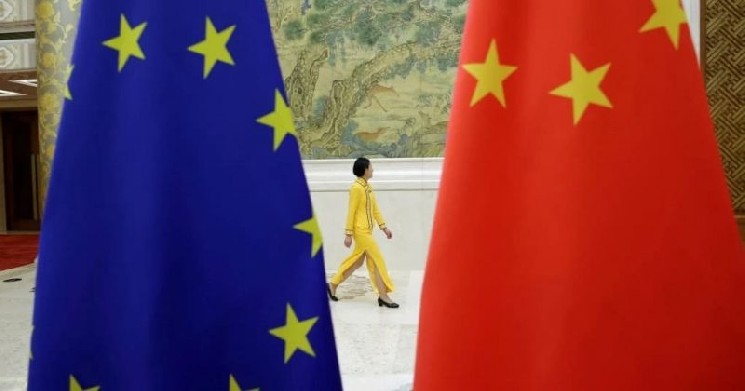
The European Union is preparing to require companies to source components from at least three different non-Chinese suppliers, part of a sweeping effort to untangle the bloc’s deep dependence on Chinese manufacturers across critical industries.
Starting June 30, 2025, Chinese medical device manufacturers will be excluded from EU public tenders valued at more than 5 million euros, under Regulation 2025/1197. For contracts where Chinese firms can still participate, their share will be capped at 50% by value.
These procurement rules are expected to apply to all EU contracting authorities, though there may be exceptions carved out for smaller local authorities and specific cases where the public interest demands flexibility.
The proposed revision of the EU Cybersecurity Act could classify several suppliers as “high-risk.” The designation primarily targets Chinese companies and would ripple across 18 critical sectors. The estimated economic impact of this single regulatory change is staggering: 367.8 billion euros over five years.
The Industrial Accelerator Act places stringent conditions on foreign investors in sectors where China dominates production, particularly batteries and clean-tech. Investors from countries controlling more than 40% of global markets in these industries, which functionally means China, would face requirements including technology transfers and local production commitments.
EU officials argue the measures are necessary for both security and fair competition. Chinese business groups have warned that these restrictions will increase costs for European companies and consumers while also slowing the continent’s decarbonization efforts. China produces roughly 80% of the world’s solar panels and dominates lithium-ion battery manufacturing.
The 367.8 billion euro estimated cost of the cybersecurity regulation alone suggests that certain sectors will face meaningful margin pressure. Companies in medical devices, clean energy, telecommunications, and critical infrastructure should expect procurement processes to become more complex and more expensive.
The battery and clean-tech restrictions under the Industrial Accelerator Act add another layer. Chinese companies that want to continue accessing the European market may need to establish local production facilities and share technology.