

The crypto derivatives market is sending an unusual signal: directional longs and directional shorts are virtually equal, a situation that analysts say is historically unsustainable and could be a harbinger of a major shift ahead.
According to an analysis published yesterday by WuBlockchain, data from synthetic dollar protocol Ethena’s transparency dashboard shows that capital deployed, a measure of excessive long demand in futures markets, fell to just $791 million, a drop of more than 85% from an all-time high.
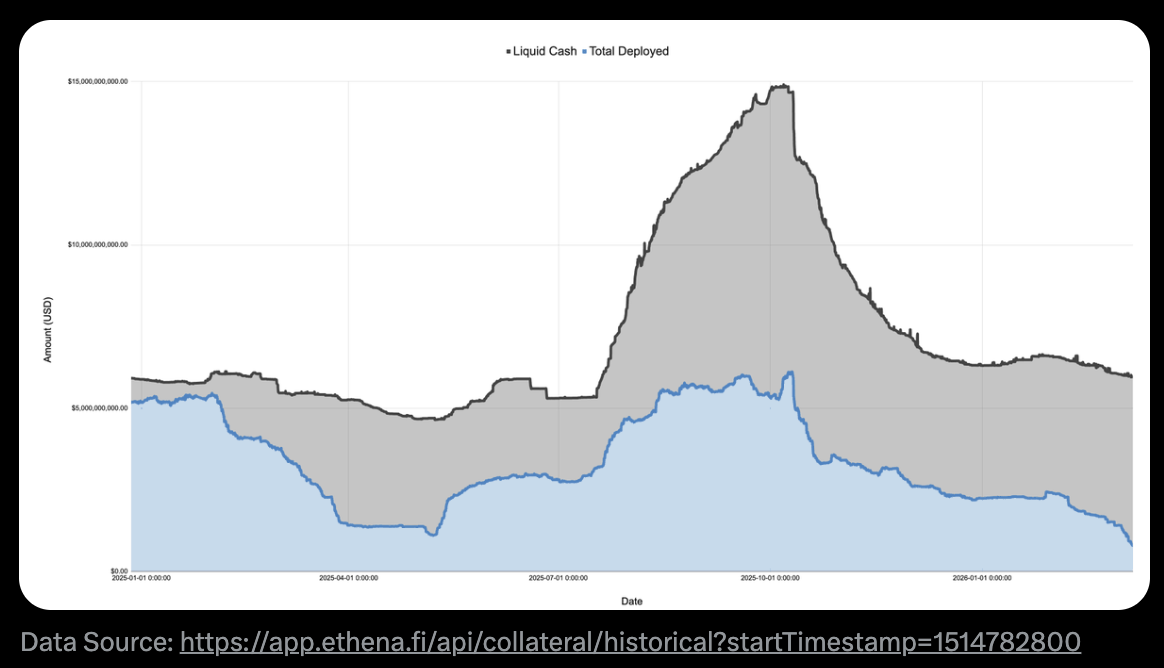
Ethena deployed capital and liquid assets – WuBlockchain
Since Bitcoin crashed to $60,000 on February 8, Ethena’s base position has shrunk by more than 60%, from over $2 billion to less than $800 million, even as the broader market has remained relatively flat.
Ethena operates by taking the short side of perpetual futures contracts against leveraged long traders, executing the classic crypto carry trade at scale. When demand for leveraged long positions exceeds the natural short interest, Ethena steps in to make up the difference. The shrinking portfolio therefore implies that directional shorts and hedgers are increasingly filling the role that basic traders once dominated.
The author of the analysis, SoskaKyle, attributes the shift largely to a growing wave of hedging activity from crypto VCs and smaller projects looking to protect their government bonds and lock in profits. With hundreds of small-cap tokens, each backed by dozens of investors and teams to manage their runways, the result has been a busy trade: actively managed structured products that have short baskets of correlated assets.
While this near-equal ratio of long to short positions could theoretically persist, the history of all asset classes shows that it rarely remains that way for long, making the market a potential turning point.
This article was written using AI workflows. All of our stories are curated, edited, and fact-checked by a human.