
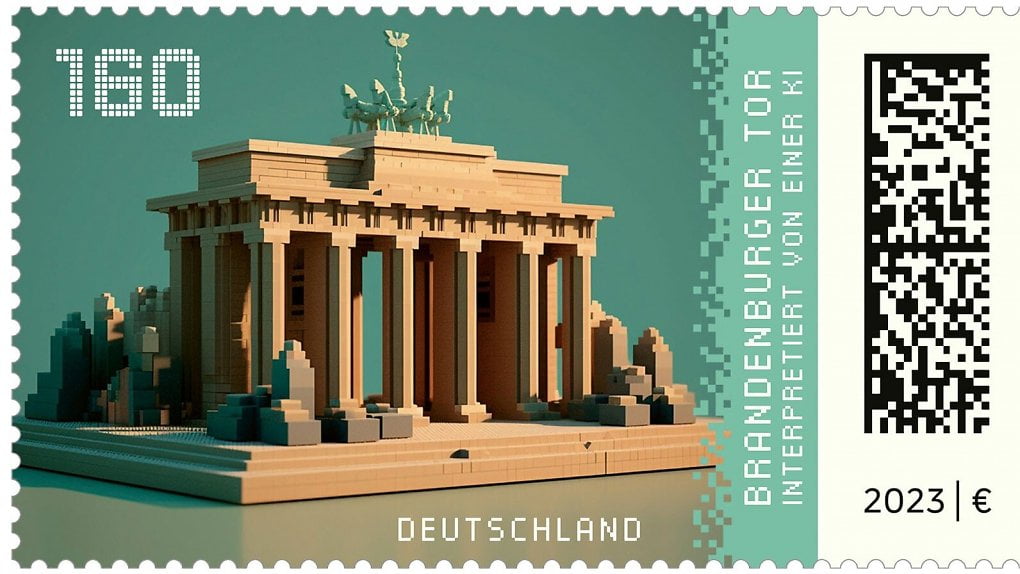
The German postal service, Deutsche Post, is set to make history by launching its very first crypto stamp on the Polygon blockchain. This initiative combines the traditional art of physical stamps with NFT technology. The debut stamp in the series, featuring the iconic Brandenburg Gate, marks the beginning of the ‘Historical Buildings’ collection.
Stamp collecting redefined: the convergence of tangible and digital
Deutsche Post’s jump into crypto stamps represents a growing shift in stamp collecting. By embracing blockchain technology, the Postal Service is bridging the gap between tangible and digital assets, offering collectors a unique experience.
The crypto stamp, designed using artificial intelligence, shows the Brandenburg Gate in a pixelated and streamlined style reminiscent of the aesthetics of the digital age.
Individual numbering and matrix code
While other postal services worldwide have also introduced crypto stamps, the German edition has unique features. Each physical stamp and its corresponding NFT representation are individually numbered, thanks to a unique matrix code. This guarantees the authenticity and exclusivity of each crypto stamp, adding value for collectors.
The crypto stamp book, including the NFT version, costs €9.90 and offers collectors an affordable entry point to digital stamp collecting. However, it is worth noting that in addition to the crypto stamp, a limited edition conventional stamp without the NFT component will also be available, with a circulation limit of up to 800,000 pieces.
Deutsche Post has chosen the Polygon blockchain as the basis for its crypto stamp NFTs. Known for its robust NFT capabilities, Polygon runs on a Proof of Stake (PoS) consensus mechanism, making it energy efficient compared to other blockchain networks. This choice is in line with Deutsche Post’s commitment to sustainability and reducing its impact on the environment.
The rise of digital collectibles
In recent years, collecting digital assets has become extremely popular. NFTs in particular have changed the way people perceive and interact with digital art and collectibles. By tokenizing physical stamps as NFTs, Deutsche Post is capitalizing on this growing trend and offering collectors a new dimension to their stamp collecting journey.
Stamps have always been a medium for recording historical events, cultural monuments and technological advances and Deutsche Post retains the essence of traditional collecting while embracing the capabilities of Web3.