
DeFi activity has surged to its highest level since the October 10-11 crash. The recent market capitulation turned into a DeFi stress test, with most protocols surviving the sudden spike in activity.
DeFi activity picked up during the last market downturn, reaching the highest level of DEX activity in recent months.
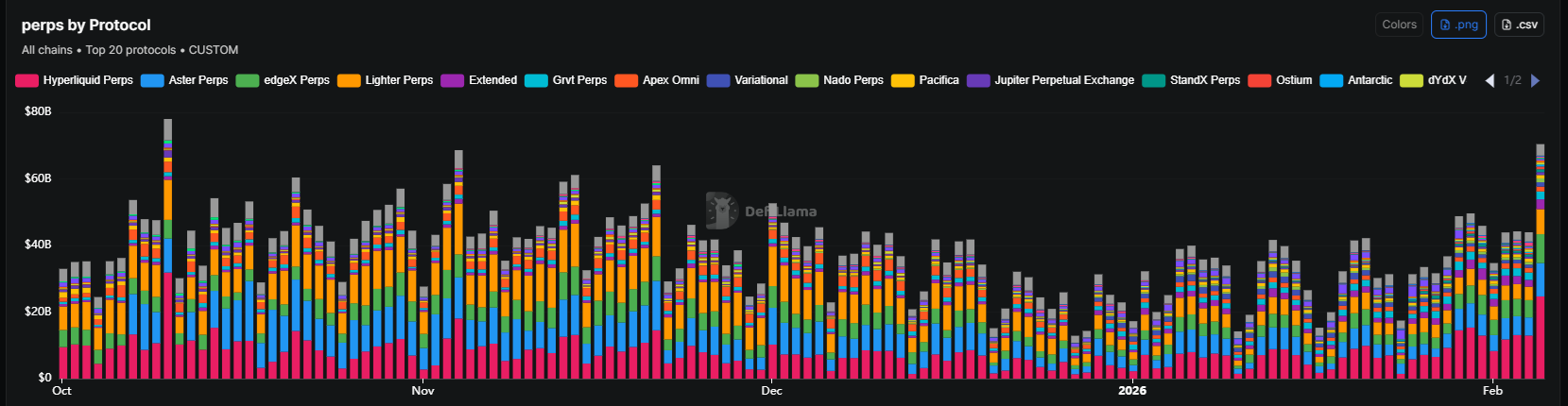
Perpetual futures DEX absorbed the highest levels of activity since October 2025, demonstrating the robustness of the DeFi infrastructure, with significant liquidity available. | Source: DeFi Lama
Leading decentralized protocols still command some of their highest fees, with most activity focused on Aave, Morpho, Jupiter, and other leading DeFi protocols and DEXs. The most active elements of the DeFi ecosystem are still perpetual futures DEX, lending, and general DEX aggregators and markets.
The big difference during this crypto cycle is that the downturn has not led to back-to-back liquidations or the failure of DeFi protocols. All DEXs and chains involved handled the extreme transactions and traffic.
The biggest shift in activity came from perpetual futures DEXs, which have already become some of the most liquid markets. Peak liquidity was concentrated at Hyperliquid and Aster.
The current market downturn has not led to major market declines, liquidity issues or DeFi liquidations as most protocols provided sufficient protection. Hyperliquid survived the current trading overload, with fewer consecutive liquidations compared to the October event.
DeFi is slowing down, but avoiding a crash
DeFi activity slowed as value capture fell to levels not seen since March 2024. Most protocols remained relatively resilient as collateral was deposited at a lower price range.
Despite the decline, protocols like Aave and Lido continue to attract deposits and active loans, among the largest fee producers in the Ethereum ecosystem. Lending to the chain remains well above 2022 levels, with more than $51 billion in value locked.
During previous market cycles, lending was hit hard by drawdowns due to panic and the lack of protection. In the last market cycle, most leading protocols showed no signs of distress or bad loans.
$ETH Liquidation levels are slightly lower than the market, with the first significant liquidation level being around $1,890. The busiest protocols as Morpho reported 5,000 liquidations valued at $105 million in the last 24 hours, but the remaining vaults and positions remain stable. Other protocols are processing loan repayments as usual, avoiding a liquidation cascade.
Despite its relative stability, users are urged not to take out new loans through decentralized protocols. Increased market volatility could accelerate liquidations in the future. However, the unwinding is still gradual compared to previous cycles.
Does DeFi still pose risks?
While DeFi has shown itself to be technically robust, the ecosystem still poses risks during a prolonged market downturn.
The first major risk is $ETH-based liquidity, which could lead to liquidations if not all loans are repaid.
Other risks include liquidity draining from some of the leading trading pairs, especially those that concentrate liquidity at a certain price range.
The biggest risk is a liquidation cascade if funds are recycled across protocols, opening more positions than initially $ETH collateral supports.