
Disclosure: The views and opinions expressed here belong solely to the author and do not represent the views and opinions of the crypto.news main article.
Decentralized finance (defi) is no longer limited to the digital world. As we look around at some of today’s most important issues, from buying a home to combating climate change, defi is increasingly playing a crucial role.
You might also like: Cryptocurrency Awareness vs. Knowledge: Education and Empowerment | Opinion
Some may be skeptical, given how overhyped defi has been in the past. This is understandable. But you only have to look around to see that Defi has a real impact on our lives in the real world.
And there are good reasons to believe that this impact will only increase in the coming years. Innovators are implementing decentralized finance in ways that will benefit the lives of many people. As these innovations progress, more will be built on top of them.
Using cryptocurrency tokens, investors can now buy shares of existing homes and homes under construction. This improves access to the real estate market as a greater number of people can now participate in transactions by investing small amounts.
Companies like RealT, Propy, and Homebase are experimenting with the best ways to tokenize real estate so it works for a wide range of people. It’s already catching on.
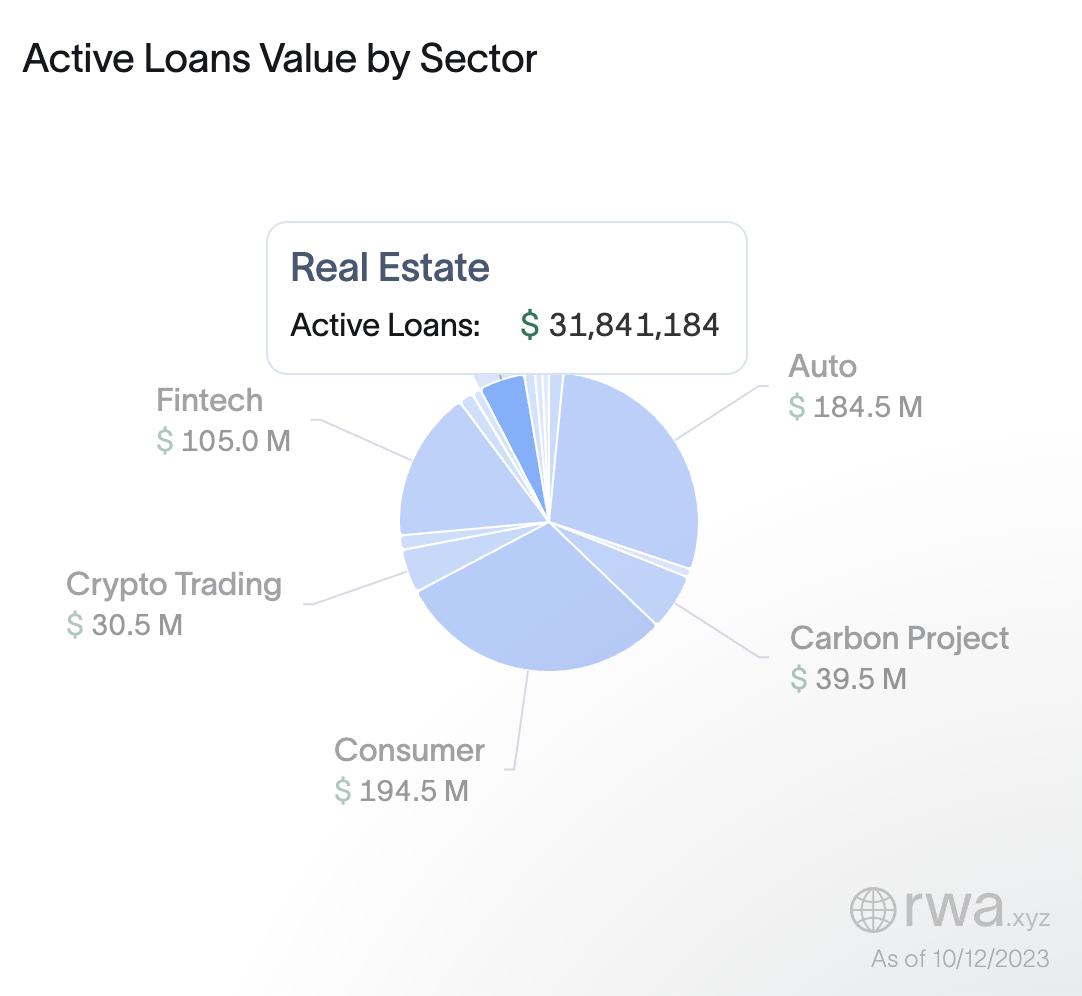
According to RWA, an analytics company for tokenized real-world assets, there is currently $31 million in active real estate loans – a huge market for tokenization. RealT launched in 2019 with the promise of making real estate accessible for investments starting at $50. Three and a half years later, more than 390 homes worth more than $92 million have been tokenized. Additionally, Propy has processed more than $4 billion in transactions in the US
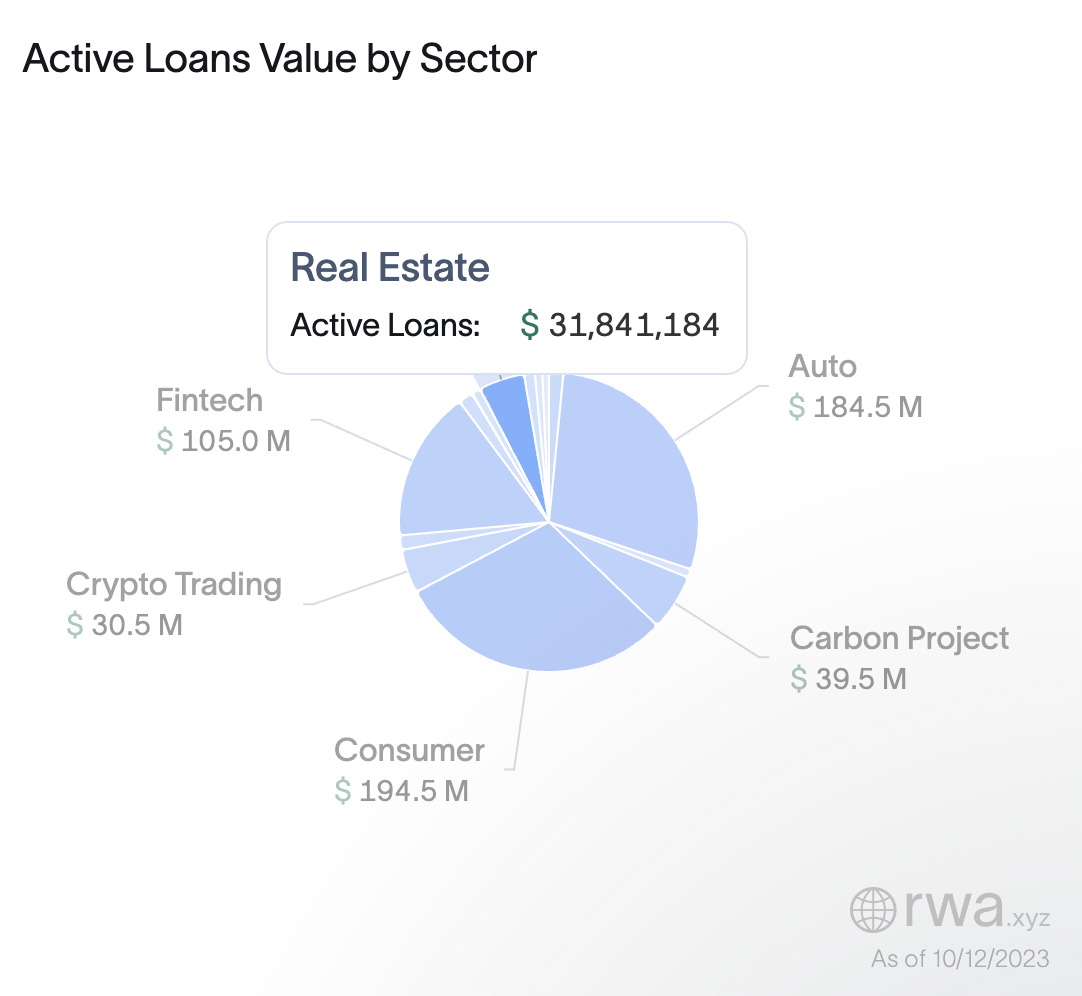
Value of active loans by sector | Source: RWA
There could be other important consequences for the real estate sector. For example, smart contracts can eliminate the need for lawyers in real estate transactions. This means more people can afford to invest in real estate.
Defi is beginning to play a role in reducing the impact of climate change, with the potential to hold large emitters accountable in a way that has been impossible until now. Carbon reductions are notoriously difficult to track, given the potential for data manipulation. But when it comes to immutable blockchains, the numbers cannot be shifted. Smart contracts can be written to control monitoring mechanisms, offering rewards and punishments to those being tracked.
In a green defi marketplace, carbon tokens are used as proof of emissions reductions and even as collateral for large transactions. Climate change protocols – targeted applications are still in the works and widespread adoption is underway. But pilot programs and demonstrations exist.
In 2022, tokenized carbon credits began trading on blockchain through the use of digital voluntary carbon markets. These credits were used as collateral to borrow against. As demand grew, it became clear that tokenization of carbon credits on blockchain was a great way to scale the transparent management of carbon markets.
For example, Toucan Protocol provides the basic infrastructure for projects that tokenize carbon credits using blockchain technology. According to Toucan, it has awarded more than 20 million carbon credits and influenced more than 50 climate projects. Another example is KlimaDAO, a decentralized autonomous organization (DAO) and defi protocol launched in October 2021. The proprietary tool gives users “the ability to selectively filter, choose and withdraw carbon credits from more than 20 million tons of available digital carbon credits.”
Defi gives individuals in undercapitalized regions access to funds without relying on centralized banking institutions. We’ve been hearing this promise in the crypto space for many years; now it is becoming reality.
Defi enables crowdsourcing and other alternative financing methods for projects that traditional banks may not want to support. There is no reason why ambitious business ideas should wither because people don’t have access to capital.
An ecosystem is developing to enable people in countries with developing economies to grow alongside the defi sector. For example, Goldfinch allows third-party investors to invest cryptocurrency funds in projects around the world. Goldfinch uses facility agreements to enable the receipt and reimbursement of funds, connecting on-chain and off-chain operations.
In the traditional insurance model, human experts decide the payouts, which requires a time-consuming and expensive process. Defi is revolutionizing this, enabling automatic payouts to beneficiaries via smart contracts once specific conditions are met.
This better protects consumers because their payouts are not dependent on one person’s decision, but on an unchangeable contract. Intermediate negotiations are no longer necessary.
For example, Ethrisc, as part of the Lemonade Crypto Climate Coalition, provided parametric crop protection to 7,000 Kenyan farmers during the late 2022 growing season to protect their crops from drought and floods. These farmers used telephones to register, with their bounty being less than a dollar.
Instant and near-instant cash transfers based on area yield data were automatically credited to their accounts with M-Pesa, Kenya’s most widely used payment system, without the need to file any claims. Compare this to traditional payouts, which can take several months or even years.
Regulatory barriers, especially from the SEC, could be a major obstacle to integrating decentralized finance into the real world. The SEC has not provided a roadmap for the future at this time, and recent actions such as the lawsuit against Coinbase indicate that things may get worse.
Furthermore, smart contracts can cause problems if bugs occur. At present, few legal frameworks exist to determine liability and under which jurisdictions certain matters fall.
Given the incredible amount of innovation in this area, it would be a shame if solutions were not developed. Defi clearly shows its ability to transform our world. As it continues to evolve, it is critical that regulators keep pace so that its potential can be fully realized.
Read more: 2050: CBDCs, AI and the unknown path ahead | Opinion
Pratik Wagh
Pratik Wagh is head of research at Currency exchange. Wagh previously worked for major oil and gas clients, performing advanced ultrasound techniques and NDT research. He ran an NDT training school called the Institute for Non-Destructive Testing and Training. He holds a master’s degree in materials science and engineering from Iowa State University and a bachelor’s degree in mechanical engineering from the University of Mumbai.