
Authored by Monty Donohew via American Thinker,
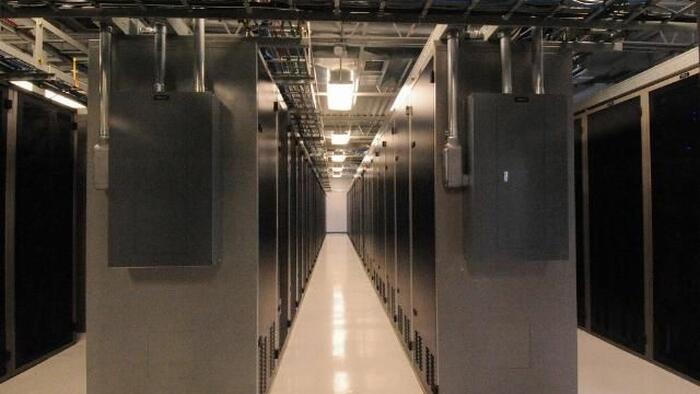
A viral X post by @r0ck3t23 featuring Marc Andreessen hopes to ignite fresh debate in tech and political circles. In the clip, Andreessen articulates a blunt frustration familiar to anyone who has tried to build anything substantial in modern America: “Right now, in many cases in many places, no you can’t.” The target is regulatory gridlock preventing factories, data centers, and, specifically the colocated nuclear microreactors many believe are needed to power the AI boom.
The post’s thesis is provocative. The old left-right divide is “obsolete.” The real conflict pits “builders” and “accelerators,” those engineering abundance through atoms and computing power, against “gatekeepers” who would freeze progress. The gatekeepers are comprised of environmentalists on one side, armed with environmental regulation that has strangled nuclear power for decades. On the other are the populist skeptics of rapid AI rollout exemplified by Bernie Sanders and Tucker Carlson. They meet, the argument goes, in a horseshoe of fear opposing the physical infrastructure the future demands.
This framing deserves consideration. America’s permitting regime is a national liability. Decades of NEPA reviews, endless environmental litigation, and bureaucratic risk aversion have delayed or killed projects that should be straightforward. Nuclear power offers a stark case study. France derives most of its electricity from nuclear, with a far cleaner grid and lower costs in key metrics. America, despite superior resources and early ambition (recall Nixon-era Project Independence targeting a thousand reactors), effectively built zero new plants for forty years after creating the Nuclear Regulatory Commission (NRC). Recent executive actions under President Trump aim to reform NRC licensing with deadlines and streamlined processes, reform that is both welcome and overdue.
Andreessen is right that colocated microreactors could elegantly solve the power demands of AI data centers, bypassing strained grids and delivering reliable, high-density energy. Tech leaders’ interest in advanced nuclear aligns with broader national security goals: reducing dependence on adversarial supply chains, bolstering baseload power, and maintaining a technological edge against China. Regulatory gridlock has real costs in lost opportunity, higher energy prices, and strategic vulnerability.
Yet the post’s sweeping narrative, that skeptics of unchecked acceleration are primarily “fighting physics” or the future, itself invites scrutiny. It risks collapsing into a Solvency Trap: a dynamic where solvable governance challenges are recast as permanent existential blockades, sustaining urgency and aligned interests while sidelining trade-offs, evidence of costs, and pragmatic safeguards. Real problems with hyperscale AI data centers exist beyond knee-jerk Luddism. They include grid reliability, massive water consumption (billions of gallons annually), localized electricity price spikes for residents and small businesses, community impacts, and job displacement in traditional sectors. These are not imaginary.
Sanders and Rep. Alexandria Ocasio-Cortez’s Artificial Intelligence Data Center Moratorium Act proposes abandoning reason, planning, and problem-solving in favor of a potentially perpetual and unyielding pause on all new construction until broader safeguards address worker effects, privacy, civil rights, and environmental strain. One can reject the hysterical blanket moratorium as overreach while acknowledging that underlying concerns nonetheless merit consideration and debate. Sanders’ equity-focused critique of Big Tech concentration, nonetheless, differs in motivation from Carlson’s populist emphasis on taxpayer subsidies, rural community burdens, and skepticism of elite-driven disruption benefiting hyperscalers at ordinary Americans’ expense. Their convergence on caution is emergent, not a secret “alliance.” Presenting it as such adds conspiratorial flair but flattens distinct worldviews. It also unnecessarily sows division and invites dismissal of valid concerns by improperly linking them to those with invalid or meritless ideological axes to grind.
Populist wariness of taxpayer-backed incentives for private data centers, projects that can span tens of thousands of acres and consume city-scale power while delivering limited direct local jobs, echoes longstanding conservative skepticism of corporate welfare. Carlson’s clashes with advocates like Kevin O’Leary highlight legitimate questions: Why should working families subsidize infrastructure primarily enriching coastal tech giants? Accelerationists rightly decry regulatory capture by legacy environmental interests. But dismissing all distributional and prudential concerns as mere “fear” risks its own form of capture by venture incentives and hype cycles.
Civilization is indeed atoms arranged by those who show up. But prudent stewardship demands more than velocity. The history of nuclear energy proves regulation can become abolition in disguise, yet safety, waste management, proliferation risks, and public confidence cannot simply be waved away with rhetoric about “deleting limits.” Successful deployment requires reformed but serious oversight that is evidence-based, time-bound, and focused on outcomes rather than process theater. Trump’s return to regulatory realism is the right step. The same applies to AI governance: rapid progress toward abundance is desirable, but experiments with alignment, security, and societal integration benefit from evidence- based and targeted guardrails rather than pure velocity.
The builders’ energy is vital. America must reclaim its capacity to execute at scale, permitting reform, nuclear revival, and domestic manufacturing resurgence. Trump administration moves on NRC and energy dominance point the way. Yet the path forward is not a binary purge of gatekeepers but disciplined solvency: measurable progress on energy abundance, worker transitions, community buy-in, and risk mitigation that delivers broad-based flourishing, not concentrated gains amid diffuse costs.