
Standard Chartered expects assets committed to decentralized finance (DeFi) to grow 37-fold to $2.7 trillion by the end of 2030.
The expansion would be driven by both tokenized real-world assets (RWAs) and crypto-native assets moving via onchain protocols, Geoff Kendrick, head of digital assets research at Standard Chartered, said in a research note on Monday.
“I think the next opportunity for generational wealth in digital assets will come through DeFi protocols,” Kendrick said. “I estimate that the number of tokenized assets active in DeFi will reach 37x by the end of 2030.”
According to Kendrick, only 3% of stablecoins and 10% of tokenized RWAs are currently used in DeFi. He predicted that the share of tokenized assets used in DeFi will rise to 30% by the end of 2030, compared to around 3.5% now.
The forecast underlines growing institutional expectations that tokenization could channel more capital into DeFi. However, reaching $2.7 trillion would require onchain assets to grow rapidly and the share of tokenized value used in DeFi protocols to increase nearly tenfold.
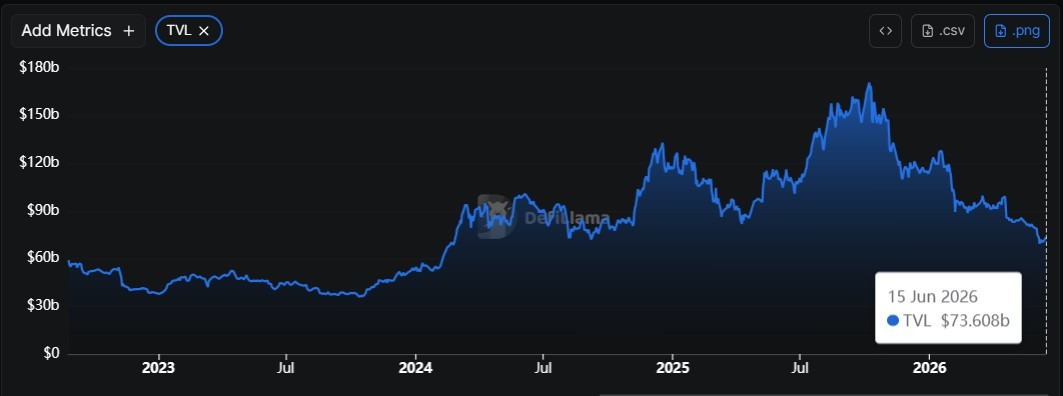
The total value of decentralized finance is locked. Source: DefiLlama
Standard Chartered previously predicted that non-stablecoin tokenized RWAs would grow to $2 trillion by the end of 2028, with tokenized money market funds and US equities accounting for the bulk of the projected market.
While Standard Chartered expects tokenized assets to drive significantly more activity in DeFi, some researchers have warned that tokenization does not guarantee deep or unified markets.
Chris Kim, CEO of Axis, previously told Cointelegraph that issuing the same asset across multiple blockchains and formats can create silo liquidity, price gaps and higher fees, limiting how easily tokenized assets can be traded, even as their overall market value grows.
Oya Celktemur, Ondo Finance’s sales director for Europe, the Middle East and Africa, also said at Paris Blockchain Week in April that tokenizing an illiquid asset does not “magically” make it liquid.
Uniswap is seen as a potential hub for tokenized markets
Kendrick said Uniswap could grow into a major trading platform as more tokenized assets move up-chain. He highlighted the decentralized exchange’s scale, brand and history of operating through multiple crypto cycles.
Kendrick added that these features could be particularly important for traditional financial institutions, which will likely prioritize security and reliability when bringing tokenized RWAs to DeFi.
“If Uniswap can commercialize enough and create enough TradFi partnerships to scale, the market cap transaction fee multiple will likely increase, narrowing the gap with Coinbase,” he wrote.