

Ethereum-based decentralized finance (DeFi) lending protocol Fira said Tuesday it launched with about $450 million in deposits, highlighting demand for fixed-rate onchain lending.
Fira said the protocol’s fixed-rate lending market allows users to lock in borrowing costs and lending yields for specific periods by organizing lending around maturities rather than floating usage-based rates, according to an announcement shared with Cointelegraph.
The fixed rate model differs from most DeFi lending protocols, where borrowers do not lock in funding costs and lenders cannot predict returns, making long-term DeFi lending less predictable. Fira’s said its model organizes markets by maturity and sets interest rates based on supply and demand mechanisms, replacing utility algorithms that fluctuate with credit activity.
Fira said the design aims to create a more predictable on-chain credit market through the introduction of yield curves and defined maturities, features that are standard in traditional fixed income markets but rare in DeFi.
Fira isn’t the first DeFi lending protocol built around fixed-rate credit. Other protocols with similar structures include Notional Finance, IPOR and Term Finance.

Fira introduces an onchain fixed-rate credit market. Source: Fira
Euler-linked liquidity migrated to Fira
Fira said it debuted with $450 million in deposits, which were “redistributed” by users of modular lending platform Euler Finance during the pre-launch phase that began on Jan. 8, Pete Siegel, chief financial officer at Fira, told Cointelegraph.
“Fira was launched in January. It opened with an initial market called UZR, which allowed about a thousand users who were already using Euler, in a product available on Euler, to migrate their assets at a flat rate.”
Siegel said the deposits were a sign of “real demand” for users looking for DeFi lending products with more predictable rates.
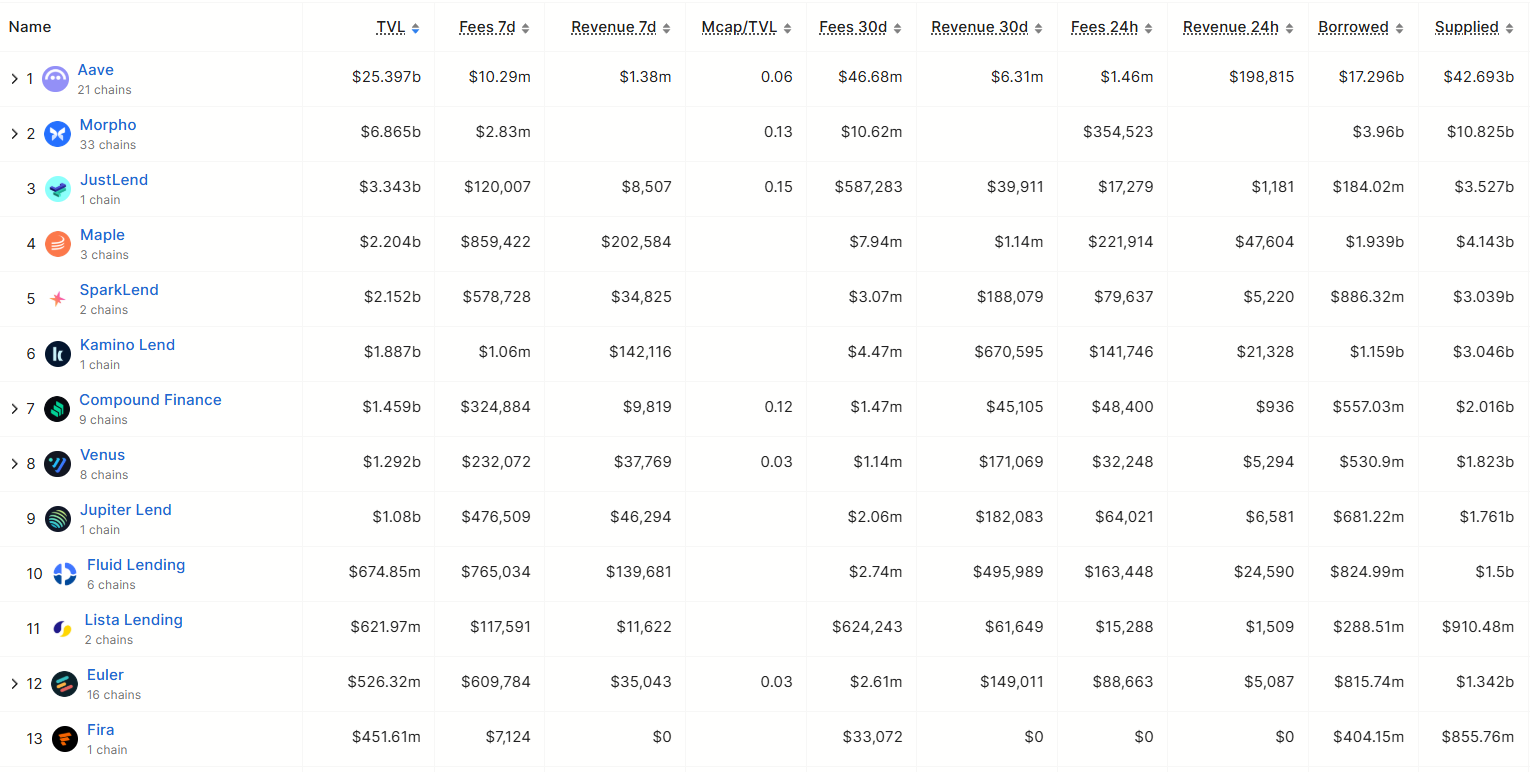
Ranking of DeFi lending protocols by TVL. Source: DeFiLlama
DefiLlama currently shows Fira with a total value of about $451.6 million on Ethereum, compared to about $25.3 billion for Aave, the industry’s largest credit protocol.
Related: Maestro Launches Mining-Backed Bitcoin Credit Market for Institutions
Fira said its smart contracts underwent six independent security audits between November 2025 and early 2026, conducted by Sherlock, Spearbit via Cantina, Hexens and yAudit.
Fira’s bug bounty program through Sherlock offers up to $500,000 in rewards for users who find critical vulnerabilities in the protocol’s open-source Ethereum-based smart contracts.
Magazine: DeFi will rise again after memecoins die out: Sasha Ivanov