
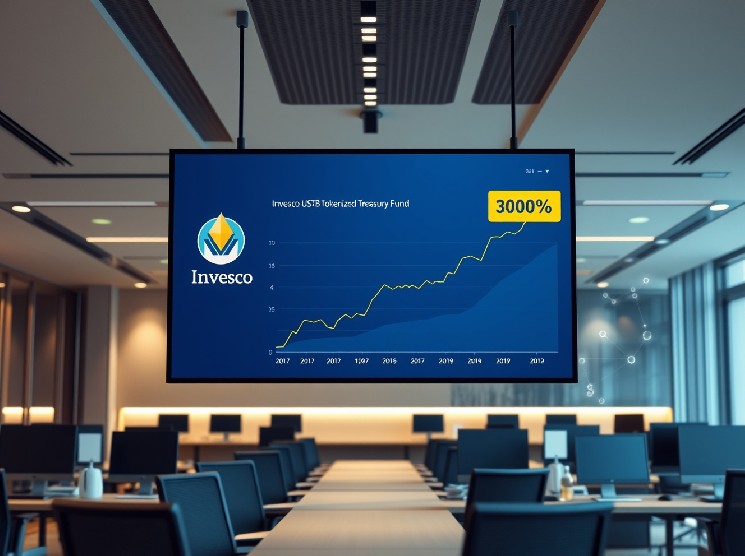
Deposits of USTB, the tokenized US Treasury fund managed by global asset manager Invesco, rose about 300% on decentralized finance (DeFi) lending protocol Aave in the second quarter of 2025 compared to the previous quarter, according to data from on-chain analytics platform Token Terminal.
Deepening the integration between traditional finance and DeFi
The sharp increase in USTB deposits underlines a growing trend: the convergence of traditional financial instruments with decentralized credit markets. USTB is issued on the FundOS transfer desk and tokenization infrastructure of Superstate, a company specializing in real-world asset (RWA) tokenization. By listing a regulated US sovereign wealth fund on a public blockchain, Invesco enables institutional and retail investors to use a low-risk, yield-bearing asset as collateral within the DeFi protocols.
What drove the growth in the second quarter?
While Token Terminal didn’t specify any catalyst, the 300% jump in deposits suggests greater confidence in tokenized Treasuries as a stable, on-chain collateral. The broader DeFi market has seen rising demand for high-quality liquid assets that can earn returns while deployed in credit pools. Aave, one of the largest DeFi lending platforms, allows users to deposit USTB and borrow other cryptocurrencies against it, opening up new use cases for tokenized government securities.
Consequences for the RWA sector
USTB’s growth on Aave indicates that real-world asset tokenization is moving beyond niche experiments. Invesco, which manages more than $1.6 trillion in assets worldwide, brings significant credibility to the industry. The fund’s integration with Superstate’s FundOS infrastructure also signals a broader industry shift with traditional asset managers using blockchain technology for operational efficiency and broader distribution. For investors, this means more opportunities to earn returns on cash-like instruments without leaving the crypto ecosystem.
Conclusion
The 300% increase in USTB deposits on Aave during Q2 2025 is a clear indicator that demand for tokenized real-world assets within DeFi is accelerating. As more traditional financial institutions explore blockchain-based issuance, the line between conventional capital markets and decentralized finance continues to blur. For now, Invesco’s USTB stands as a notable example of how regulated funds can find product-market fit in the crypto economy.
Frequently asked questions
Question 1: What is USTB?
USTB is a tokenized US Treasury fund issued by Invesco and represents shares in a short-term portfolio of government bonds. It is designed to provide a stable, yield-bearing asset that can be used in DeFi applications.
Question 2: Why are tokenized Treasuries like USTB popular in DeFi?
They provide low-risk regulated assets that can be used as collateral for loans or to earn returns within credit protocols, combining the security of government bonds with the programmability of blockchain.
Question 3: Who is Superstate and what role does it play?
Superstate is a real-world asset tokenization company that provides the FundOS infrastructure used to issue and manage USTB on-chain. It allows traditional fund management and transfer agency functions to operate on a blockchain.