

Close Menu
  • Instructions
  • News
    • DeFi
    • Smart Contract
    • Markets
    • Web3
    • Adoption
    • Memecoins
    • Analysis
    • Mining
    • Scams
    • Security
  • Education
    • Learn
    • Wallets & Exchange
  • Documentaries
  • Videos
    • Alessio Rastani
    • Altcoin Buzz
    • Coin Bureau
    • Dapp University
    • DataDash
    • Digital asset News
    • EllioTrades Crypto
    • MMCrypto
    • Lark Davis
    • Ivan on Tech
    • Benjamin Cowen
  • Market
    • Crypto Market Cap
    • Heat Map
    • Converter
    • Metal Prices
    • Stock prices
  • Bonus Books
  • Tools
What's Hot

Malaysia seized 75,000 mining rigs. The grid wars are real

July 21, 2026

Across, Allbridge, TeleSwap lost $5.7M to bridge hacks in past week

July 21, 2026

Augustus raises $180 million to build a clearing bank for the AI and stablecoin era

July 21, 2026
Facebook X (Twitter) Instagram
Recession Profit AlertsRecession Profit Alerts
  • Instructions
  • News
    • DeFi
    • Smart Contract
    • Markets
    • Web3
    • Adoption
    • Memecoins
    • Analysis
    • Mining
    • Scams
    • Security
  • Education
    • Learn
    • Wallets & Exchange
  • Documentaries
  • Videos
    • Alessio Rastani
    • Altcoin Buzz
    • Coin Bureau
    • Dapp University
    • DataDash
    • Digital asset News
    • EllioTrades Crypto
    • MMCrypto
    • Lark Davis
    • Ivan on Tech
    • Benjamin Cowen
  • Market
    • Crypto Market Cap
    • Heat Map
    • Converter
    • Metal Prices
    • Stock prices
  • Bonus Books
  • Tools
Recession Profit AlertsRecession Profit Alerts
Home»Security»AI crypto scams rise 500% – Is SEC’s $12.3 million case just the start?
Security

AI crypto scams rise 500% – Is SEC’s $12.3 million case just the start?

June 2, 2026No Comments2 Mins Read

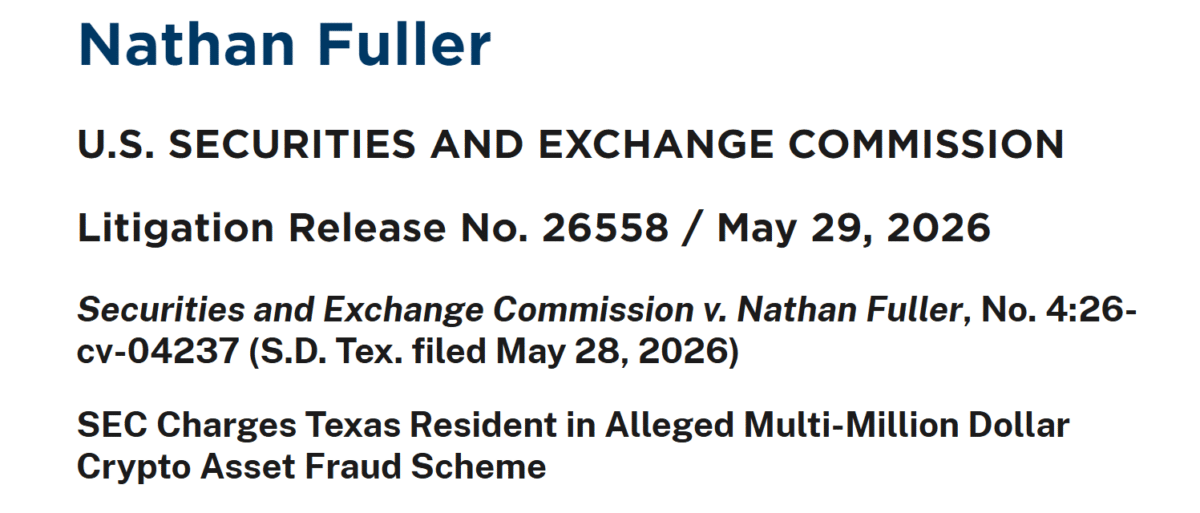
What appeared to be an AI-driven crypto trading operation is now facing scrutiny from the SEC. Between 2022 and 2024, Nathan Fuller, Founder of Privvy Investments and Gateway Digital Investments, allegedly raised $12.3 million from investors by promoting automated arbitrage strategies powered by trading bots.
Source: SEC.gov

Yet beneath the idea, capital flows told a different story. Only 3% of investor funds reportedly reached actual trading activity, according to the SEC report. Instead, millions allegedly funded personal spending and Ponzi-style payouts, allowing the operation to appear profitable while attracting new participants.

The money trail raised red flags

As regulators followed the flow of funds, the alleged trading operation began looking increasingly disconnected from its marketed strategy.

Approximately $6.2 million allegedly financed personal spending, including a house, vehicles, travel, and gambling. Moreover, another $5.5 million reportedly flowed back to earlier investors as returns.

Source: SEC.gov

Rather than generating profits through market performance, the operation relied on incoming deposits to satisfy existing obligations. As fresh capital funded payouts, the structure became increasingly dependent on continuous recruitment rather than sustainable returns.

The operation reflected a classic Ponzi scheme. More importantly, it highlighted how AI narratives can mask underlying economics, making weak investment models appear more realistic than they actually are.

How AI is changing the fraud playbook

As AI adoption accelerates, fraud operators increasingly use the technology to scale deception rather than innovation.

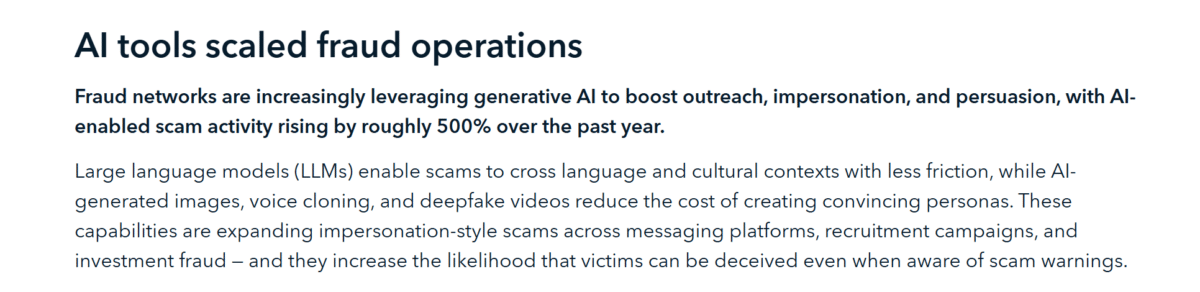
A recent report by TRM Labs shows AI-enabled scam activity rose by roughly 500% over the past year, highlighting rapid adoption across fraud networks.
Source: TRM Labs

This trend emerges because large language models, deepfakes, and voice-cloning tools lower the cost of creating convincing narratives.

See also  Crypto Payments to Human Traffickers Surges 85%

The risk intensifies when AI intersects with crypto. This is because both sectors attract speculative capital, while technical complexity often limits independent verification.

The SEC’s allegations against Nathan Fuller underscore how AI-themed investment narratives can be used to market fraudulent crypto schemes.


Final Summary

  • AI-driven crypto fraud is becoming more sophisticated, making independent verification increasingly important for retail investors.
  • Growing misuse of AI narratives may accelerate regulatory scrutiny while weakening trust across the broader crypto ecosystem.

Source link

case Crypto Million rise scams SECs Start

Related Posts

Across, Allbridge, TeleSwap lost $5.7M to bridge hacks in past week

July 21, 2026

Augustus raises $180 million to build a clearing bank for the AI and stablecoin era

July 21, 2026

Crypto payments for peptides reportedly on pace for $100M per year

July 21, 2026

Crypto institutions look beyond audits as trust signals falter: Hacken

July 21, 2026
Top Posts

Spark Publishes Risk Framework for Sky Agent Network Built on Sky Protocol Security Principles

May 17, 2026

Western Union eyeing stablecoin launch to settle global transactions without SWIFT, CEO says

April 27, 2026

Michael Saylor Fuels Optimism for Another Massive Strategy Bitcoin Buy – Featured Bitcoin News

April 5, 2026

Type above and press Enter to search. Press Esc to cancel.