
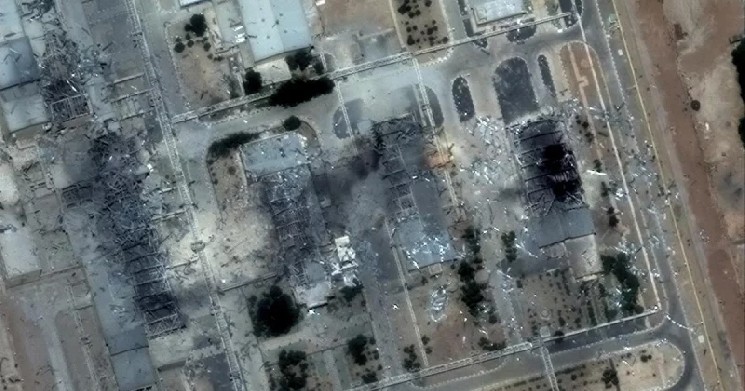
Three US Navy guided-missile destroyers came under attack from Iranian forces while transiting the Strait of Hormuz on May 7, with CENTCOM confirming that all incoming threats were successfully intercepted and the US responded with strikes against Iranian missile launch sites, command-and-control locations, and military infrastructure in southern Iran.
The engagement marks one of the most significant direct military exchanges between US and Iranian forces during what is technically still a ceasefire, one brokered on April 8 and already showing serious cracks.
What happened in the strait
The USS Truxtun (DDG 103), USS Rafael Peralta (DDG 115), and USS Mason (DDG 87) were the three destroyers targeted during the incident. Iranian forces launched a combination of missiles, drones, and small boats against the vessels.
No US assets were struck. The Navy’s interception systems performed as designed, neutralizing the threats before impact.
US forces then conducted what CENTCOM described as self-defense strikes against the launch sites and supporting infrastructure responsible for the attack. The Pentagon also reported targeting vessels that were laying sea mines in the waterway.
President Trump characterized the US response as limited and defensive, emphasizing that the ceasefire remains in effect.
A ceasefire that keeps catching fire
The ceasefire between the US, Israel, and Iran was reached on April 8 after a period of US and Israeli strikes in February.
A US naval blockade of Iranian ports began on April 13, just five days after the truce was announced. That blockade has impacted dozens of vessels and created significant friction in the region’s shipping lanes.
Periodic exchanges between US and Iranian forces have continued since the truce was brokered, particularly in and around the Strait of Hormuz. The May 7 incident is the most dramatic of these exchanges.
The Strait of Hormuz handles roughly a fifth of global oil transit.
The crypto angle: sanctions, Bitcoin, and maritime insurance
Iran has reportedly launched a Bitcoin-backed maritime insurance platform called “Hormuz Safe,” designed to provide coverage for vessels navigating the increasingly dangerous strait. The initiative represents an attempt to use cryptocurrency infrastructure to work around the sanctions regime that has cut Iran off from conventional international financial systems.
If sanctioned nations can build parallel financial infrastructure using crypto rails, it changes the calculus around economic isolation as a foreign policy tool. Bitcoin doesn’t care about OFAC designations.
What this means for crypto investors
Trading volumes tend to increase during periods of uncertainty, particularly when traditional markets experience disruption.
Traders should also consider the second-order effects on Bitcoin mining. Iran has been a notable Bitcoin mining hub, partly because of subsidized electricity and partly because mining provides a mechanism for converting energy resources into internationally fungible value despite sanctions. Any escalation that disrupts Iranian infrastructure could temporarily affect global hashrate distribution.