
Close Menu
  • Instructions
  • News
    • DeFi
    • Smart Contract
    • Markets
    • Web3
    • Adoption
    • Memecoins
    • Analysis
    • Mining
    • Scams
    • Security
  • Education
    • Learn
    • Wallets & Exchange
  • Documentaries
  • Videos
    • Alessio Rastani
    • Altcoin Buzz
    • Coin Bureau
    • Dapp University
    • DataDash
    • Digital asset News
    • EllioTrades Crypto
    • MMCrypto
    • Lark Davis
    • Ivan on Tech
    • Benjamin Cowen
  • Market
    • Crypto Market Cap
    • Heat Map
    • Converter
    • Metal Prices
    • Stock prices
  • Bonus Books
  • Tools
What's Hot

Vitalik Buterin says AI ‘formal verification’ could actually make crypto much more secure

May 20, 2026

Trump orders government, Fed to review crypto firms' access to payment rails

May 20, 2026

Stripe-backed Tempo taps $7.5 billion DeFi lender Morpho to expand beyond payments

May 19, 2026
Facebook X (Twitter) Instagram
Recession Profit AlertsRecession Profit Alerts
  • Instructions
  • News
    • DeFi
    • Smart Contract
    • Markets
    • Web3
    • Adoption
    • Memecoins
    • Analysis
    • Mining
    • Scams
    • Security
  • Education
    • Learn
    • Wallets & Exchange
  • Documentaries
  • Videos
    • Alessio Rastani
    • Altcoin Buzz
    • Coin Bureau
    • Dapp University
    • DataDash
    • Digital asset News
    • EllioTrades Crypto
    • MMCrypto
    • Lark Davis
    • Ivan on Tech
    • Benjamin Cowen
  • Market
    • Crypto Market Cap
    • Heat Map
    • Converter
    • Metal Prices
    • Stock prices
  • Bonus Books
  • Tools
Recession Profit AlertsRecession Profit Alerts
Home»Security»Vitalik Buterin says AI ‘formal verification’ could actually make crypto much more secure
Security

Vitalik Buterin says AI ‘formal verification’ could actually make crypto much more secure

May 20, 2026No Comments2 Mins Read

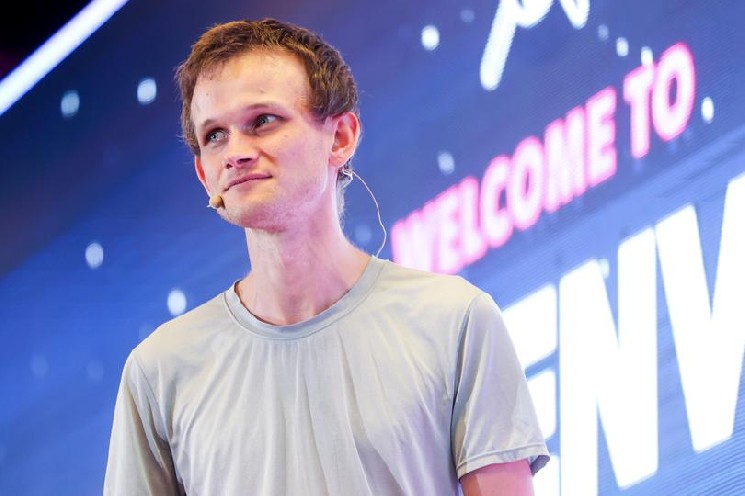
Vitalik Buterin says artificial intelligence could ultimately make cryptocurrency systems and critical internet infrastructure more secure, if developers combine AI-generated code with mathematically verified software.

The Ethereum co-founder argued that AI-assisted “formal verification” could become one of the most important tools for cybersecurity as increasingly advanced AI systems make it easier to discover software vulnerabilities, in a lengthy blog post shared Monday.

Formal verification refers to the use of machine-checkable mathematical proofs to confirm that software behaves exactly as intended. While the technique has existed for decades, Buterin said recent advances in AI are making it dramatically more practical by helping developers write both code and the proofs needed to verify it.

Buterin framed the technology as a response to growing fears that AI could overwhelm defenders by accelerating bug discovery and cyberattacks. Smart contract exploits remain a persistent issue across crypto, with attackers frequently draining millions of dollars from vulnerable decentralized finance protocols.

Mathematically verified software could help reverse that trend, especially in areas where security failures would be catastrophic, Buterin argued. He specifically pointed to Ethereum infrastructure, zero-knowledge proof systems, consensus mechanisms and post-quantum cryptography as technologies that could benefit from formal verification.

“Bugs in computer code are scary,” Buterin wrote, before describing how risks become even more severe when software controls immutable onchain assets or advanced cryptographic systems.

The post also pushed back against a growing belief among some security researchers that increasingly complex AI-generated software may become impossible to fully trust. Instead, Buterin said AI could eventually strengthen cybersecurity by helping developers identify and eliminate flaws faster than attackers can exploit them.

See also  BNB Chain Issues Critical Alert to Metamask Users of New Layer-2 Platform

Still, he cautioned that formal verification is “not a panacea.” Even mathematically proven systems can fail if developers verify the wrong assumptions, overlook hardware vulnerabilities or leave parts of a system unchecked.

“AI gives you the ability to write large volumes of code at the cost of accuracy, and formal verification gives you back … accuracy,” Buterin writes. “By default, AI will enable large amounts of very sloppy code … But there is an optimistic future for cybersecurity here.”

Read more: The Ethereum Foundation unveils new ‘Clear Signing’ standard to stop users from approving malicious crypto transactions

Source link

Buterin Crypto Formal secure verification Vitalik

Related Posts

Trump orders government, Fed to review crypto firms' access to payment rails

May 20, 2026

Echo Protocol Pauses Monad Bridge After Admin Key Breach Sparks $816K Loss

May 19, 2026

No, XRP Ledger Foundation Not Airdropping Ripple USD, It’s Scam

May 19, 2026

Russia Approves Ban on Crypto Mining in Kursk Border Region Amid Energy Crisis

May 19, 2026
Top Posts

Which New World Order Are We Talking About?

October 4, 2023

Secured Finance Crosses $40M Cumulative Crypto Lending Volume As The Protocol Experiences Growth Amid DeFi RWA Adoption 

March 3, 2026

Mining giant Foundry to introduce institutional zcash mining pool

March 11, 2026

Type above and press Enter to search. Press Esc to cancel.