
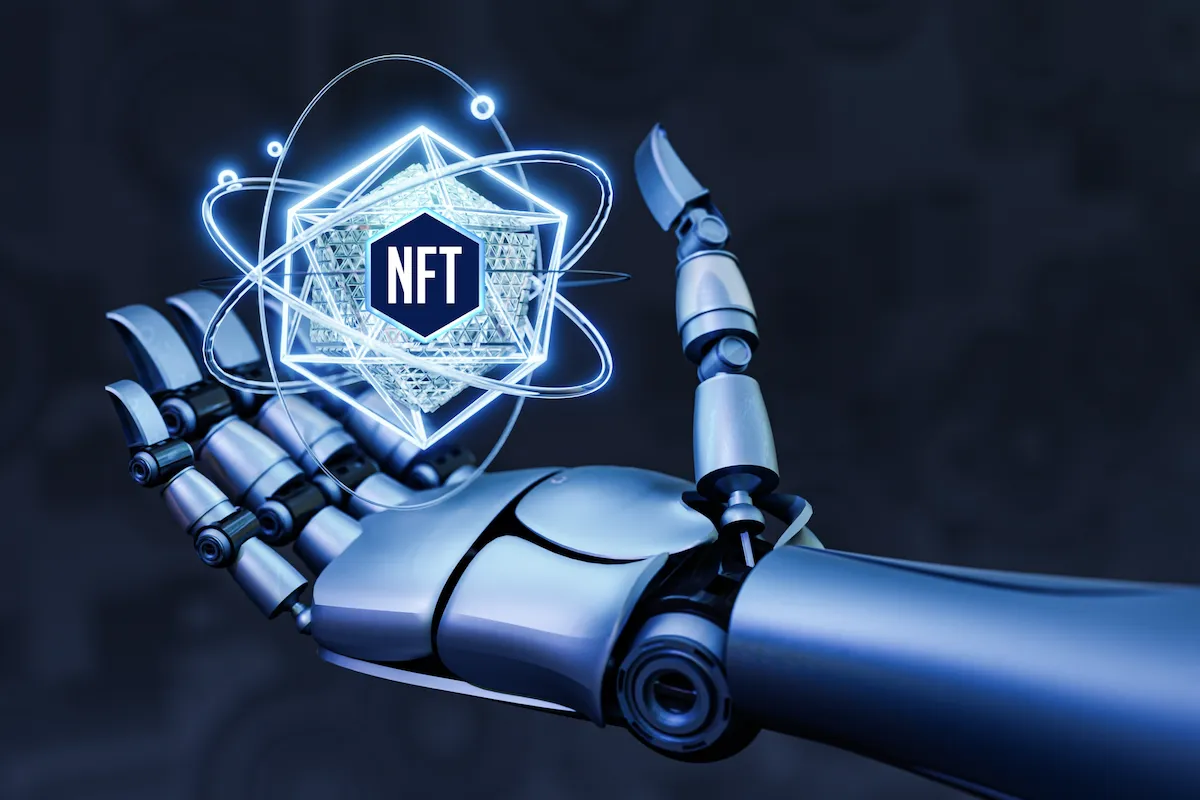
AI-powered NFTs (iNFTs) are not just a technical upgrade; they represent a shift towards digital identity systems that actually serve the individual. As old platforms and static technologies fall short, iNFTs emerge as intelligent, autonomous, and privacy-aware agents of self-sovereign identity in Web3.
Key Takeaways
-
iNFTs enable dynamic, evolving digital identities that adapt to user behavior and real-world context.
-
AI enables real-time identity verification, anomaly detection, and autonomous protection against misuse or fraud.
-
iNFTs can act on behalf of users in decentralized applications, reducing friction and increasing trust.
-
Selective disclosure, powered by AI, means users share only what is necessary, and nothing more.
-
The failures of previous NFT models have paved the way for a smarter, AI-driven infrastructure that puts user control at its core.
Older projects paved the way, but could not cover the distance
Many early NFT projects made bold promises but delivered limited utility. With static metadata and minimal functionality, most NFTs were naturally collectible, not dynamic tools. As the market matured, these limitations became apparent, leading to a shift toward more adaptive and meaningful use cases.
Even leading platforms like OpenSea had to acknowledge their missteps. The announcement of the SEA token and the Reboot OS2 came with a public admission: they had become too corporate and had disconnected from their users.
At the same time, projects like Pudgy Penguins showed resilience. Despite the volatile conditions, the PENGU token launched with a strong market capitalization of $3.5 billion. currently $895 million. That’s not failure – it’s adaptation. It shows that communities continue to value projects that evolve and deliver lasting value.
The broader point is this: the NFT space needed a reset. That reset made room for innovations such as iNFTs.

iNFTs: identity that evolves with you
Smart, personalized identity management
A static NFT can confirm ownership of a credential. An iNFT goes further: it acts as an intelligent agent that can manage credentials, answer authentication questions, and communicate with dApps use of natural language.
It’s not just about proving who you are. It’s about automating those interactions to reduce friction and free users from manual tasks. This makes your identity more accurate, responsive and efficient in decentralized ecosystems.
Learning from behavior, adapting in real time
AI-powered NFTs evolve with the user. They observe how you interact with platforms, what types of information you share, and how you navigate different environments. Your iNFT can customize your profile accordingly: updating your login information, refining preferences, and becoming a more accurate representation of you.
If you complete a new course, change professions or start using new services, your iNFT may adapt. It keeps your digital identity up to date without the need for constant manual intervention.
Technically, these adjustments rely on predefined AI models and access to verifiable data feeds, meaning full autonomy is ambitious but increasingly feasible.
Security that moves faster than threats
AI enables proactive security features that static credentials cannot match. Your iNFT can monitor behavioral patterns to detect fraud, identify unauthorized access and prevent abuse. Instead of simply prove identityit protects it.
Suppose someone tries to communicate with your digital identity using unfamiliar language patterns, devices, or behaviors. In that case, the iNFT can respond automatically: deny access, request further verification or warn you in real time.
This is security as a living, thinking function – not a locked door waiting to be broken open.
But like any AI system, this also comes with potential risks, including algorithmic bias and overfitting, that need to be continuously monitored and controlled.
Autonomy and digital representation
An iNFT not only verifies who you are, but can also act on your behalf. It can interact with smart contracts, fill out forms, confirm age or eligibility, and even negotiate terms using preset logic and natural language understanding.
I’ve researched DAO ecosystems and seen first-hand how decentralized recruiting is evolving. For example, your iNFT can:
-
Check your qualifications for one job DAO.
-
Confirm your participation in a recognized event.
-
Submit identifying information with restrictions based on your privacy rules.
This kind of intelligent interaction makes decentralized applications more usable and scalable.
Consider a freelance professional using their iNFT to apply for a remote job. The iNFT validates login credentials, confirms language proficiency, and ensures geographic compliance, without sharing personal data beyond what is necessary.
These scenarios are not just theoretical. Alethea AI’s iNFT protocol has already enabled intelligent agents like ‘Alice’ to engage in real-time conversations while performing actions via smart contracts, such as minting, upgrades and fusion.
More generally, Web3 platforms are in development agentic AI smart contracts that autonomously review data, verify identity attributes, and trade within DAOs or apps – without human intervention.
Selective disclosure: privacy that understands context
Privacy in Web3 is not about hiding everything. It’s about sharing the right things – in an intelligent way.
With AI, iNFTs provide context-aware disclosure. Do you have to prove that you are over 18? It just shares that fact. Would you like to confirm employment status? It shows a verified reference without exposing your entire history.
This gives users control, builds trust and reduces unnecessary exposure. It also aligns with the principles of self-sovereign identity – where the individual decides what to share and when.

We have outgrown the static references
The original promise of NFTs was decentralized ownership. But ownership alone does not build identity. It does not protect the data. It doesn’t evolve.
Static credentials served a purpose, but they’re stuck in the past. They require constant user management, cannot verify behavior in real time, and expose users to both technical and social vulnerabilities.
iNFTs could address these gaps. They provide users with tools to manage their identities in the same way we manage relationships in real life: fluidly, contextually, and on our own terms.
Still, the transition to iNFTs brings challenges, especially around regulatory clarity, technical interoperability, and public skepticism about AI ethics. Addressing these concerns will be critical to gaining mainstream acceptance.
What comes next
AI-powered NFTs are already being explored by teams like Alethea AIwhere avatars can have a conversation, verify their identity and evolve based on input. Use cases range from decentralized KYC and AML processes to credential management in education, healthcare and employment.
Yet adoption depends on trust, usability and clear communication. These systems must be simple enough for ordinary users, secure enough for professionals and transparent enough to meet legal and ethical standards.
Expect early adopters in niche ecosystems, such as DAOs, online education and metaverse platforms– to take the lead, followed by broader implementation as UX and governance mature.
Final thoughts
The NFT identity space has not failed: it has exposed its own limits. That moment of reckoning paved the way for iNFTs, where AI adds intelligence, adaptability and privacy to digital credentials.
While badges, access tokens, and collectibles remain valuable parts of Web3 culture, identity requires more. We need digital agents who not only represent us, but evolve with us, protect our data and act on our behalf.
iNFTs aren’t just a futuristic layer; they are a meaningful next step in making digital identity smarter, more secure, and truly self-sovereign.