

Peter Steinberger, creator of the open-source AI assistant OpenClaw, issued a public warning on March 19. He urged users to treat all crypto-related emails claiming ties to the project as scams. The project is “open source and non-commercial,” Steinberger wrote on X. He told followers to rely only on the official website and stay skeptical of commercial wrappers.
The incident marks the latest chapter in a prolonged clash between Steinberger and crypto opportunists who have harassed, impersonated, and exploited his project since it first went viral in January.
Fake Airdrops Target Developers Worldwide
The warning came as multiple developers reported receiving fraudulent emails offering fake $CLAW token airdrops. The phishing emails appear to originate from GitHub notification addresses, lending them a veneer of legitimacy. They promise $5,000 in CLAW tokens and direct recipients to register wallets via suspicious Google links.
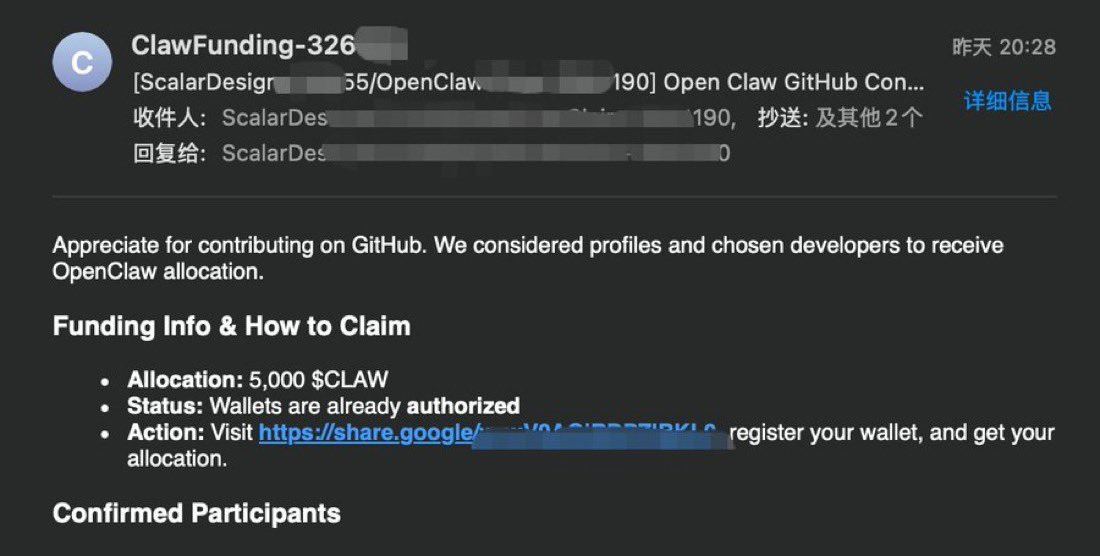
Source: X.com via @catolicc
Screenshots shared on X reveal a coordinated campaign targeting GitHub contributors with nearly identical messages. The emails reference the “OpenClaw GitHub Contributors Airdrop” from accounts such as “ClawFunding” and “ClawReward.” Each message lists supposed “Selected Contributors” to create a false sense of exclusivity among recipients. Some versions have been translated into Spanish, suggesting the campaign spans multiple regions.
Security researcher Aoke Quant suspected that attackers scraped developer information directly from GitHub for mass distribution. Developer Daniel Sánchez captured the prevailing sentiment: unsolicited offers of free money are almost certainly scams. He added that open-source projects have no reason to run crypto giveaways of any kind.
Months of Harassment and a Disastrous Rebranding
The latest phishing wave is not an isolated incident but an escalation of months-long harassment. Since OpenClaw first went viral as Clawdbot in late January, crypto scammers have repeatedly targeted the project. Someone created an unauthorized memecoin on Solana, which crashed 96% within a single day.
Steinberger was forced to ban all crypto discussion in the project’s Discord server entirely. His X notification feed became “unusable” due to the constant barrage of token hashes and messages.
Folks, if you get crypto emails from websites claiming to be associated with openclaw, it’s ALWAYS a scam.
We would never do that. The project is open source and non-commercial. Use the official website. Be sceptical of folks trying to build commercial wrappers on top of it.
— Peter Steinberger 🦞 (@steipete) March 18, 2026
The situation worsened when Anthropic asked Steinberger to rename the bot over trademark concerns. He changed the name from Clawdbot to Moltbot, but crypto scammers were prepared to strike immediately. Within five seconds of the switch, attackers sniped the original account to promote new tokens. They served malware from the hijacked account before Steinberger could properly secure the transition. His GitHub username was stolen in roughly 30 seconds and used to distribute malicious code. He described the ordeal as “the worst form of online harassment” he had ever experienced.
OpenAI Move Fails To Deter Scammers
In February 2026, OpenAI invited Steinberger to lead its personal AI agents division under Sam Altman. Steinberger accepted, saying the partnership was the fastest way to bring his vision to everyone. OpenClaw continues as an open-source project now supported by OpenAI’s infrastructure and resources. Yet the move to a major tech company has clearly not deterred scammers from exploiting the brand.
Security firm SlowMist had previously warned that Clawdbot instances exposed API keys and private chat logs. Researcher Jamieson O’Reilly found that unauthenticated instances left hundreds of credentials publicly accessible. These security gaps may have given scammers the data needed to craft convincing phishing emails.
For Steinberger, the message remains unchanged: there will never be a coin, and any claim to the contrary is fraud.