

As oil surges past $100 amid escalating Middle East tensions, the question for the Bitcoin network and miners is not whether their power bills will rise, but whether Bitcoin’s price will fall.
According to research from bitcoin mining software and services company Luxor’s Hashrate Index, the direct effect of oil price shocks on mining costs is likely to be limited, but the broader macroeconomic consequences could weigh more heavily on the industry.
However, the impact of oil prices surging isn’t zero on the Bitcoin network.
Luxor estimates that about 8 to 10 percent of global bitcoin hashrate operates in electricity markets where power prices are closely linked to crude oil. These operations are primarily concentrated in Gulf states such as the United Arab Emirates and Oman, with smaller contributions from Iran, Kuwait, Qatar and Libya.
“The genuinely oil-exposed countries” are the Gulf states, Luxor wrote in its research note, adding that the UAE and Oman together account for roughly about 6% of the network’s computing power or hashrate.
“These grids run primarily on natural gas derived from oil production, with electricity pricing that does track crude more directly than in the US or Russia,” the report said.
Meanwhile, Iran is estimated to hold another 0.8%, and other smaller contributors like Kuwait, Qatar, and Libya bring the total crude-sensitive hashrate exposure to roughly 8–10% of the network.
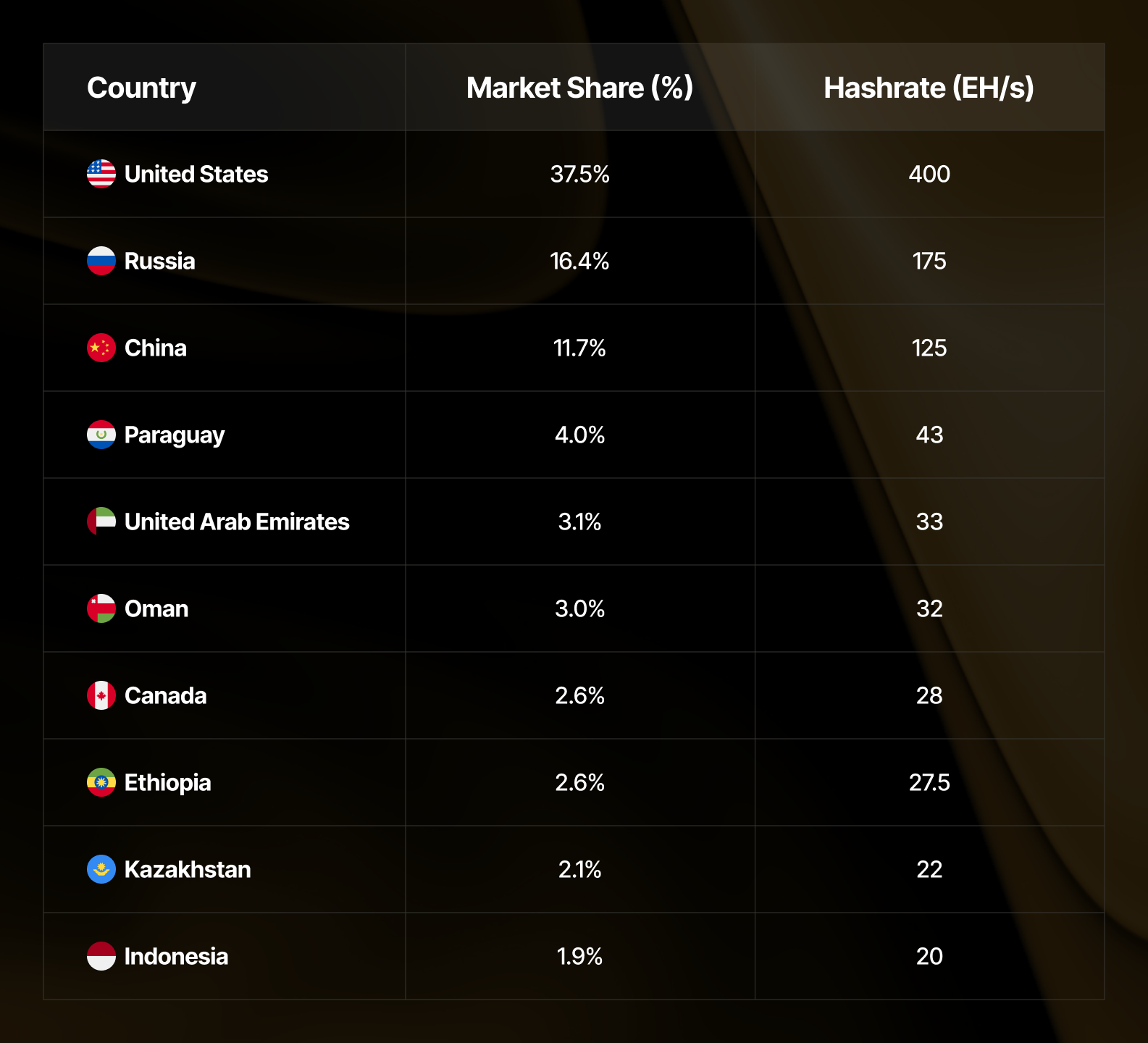
Top countries powering the Bitcoin network in 1Q (Hashrate Index)
The remaining roughly 90% of the network runs in regions where electricity prices are driven by natural gas, coal, hydro or nuclear energy, meaning crude oil price swings have little direct influence on mining costs.
Impact on mining
What does this mean for bitcoin miners, who run power-hungry machines to secure the network and validate the transactions?
Luxor argues that even if oil prices remain above $100 per barrel, the effect on mining economics from higher electricity costs would likely be limited to a small portion of the network. Electricity is the single largest input cost for mining bitcoin.
Instead, the bigger risk for miners lies in how geopolitical shocks affect bitcoin’s price. According to Luxor, periods of macro stress often trigger risk-off behavior in financial markets, which can pressure volatile assets such as Bitcoin.
Recent data cited by the firm shows hashprice, a measure of profitability for the miners, fell to an all-time low of $27.89 per petahash per second per day in February, driven largely by a 23.8% drop in bitcoin’s price during the same period.
For miners, Luxor concludes, profitability is far more sensitive to changes in bitcoin’s price than to shifts in electricity costs.
Read more: Bitcoin hashrate drops 12% in worst drawdown since China mining ban: CryptoQuant