
Disagreements within a decentralized autonomous organization (DAO) are a sign of a healthy DAO, according to Dr. Michael Egorov, founder of decentralized finance (DeFi) platform Curve Finance.
DAOs are a decentralized organizational structure that relies on smart contracts to automate functions and member votes to manage onchain protocols.
Egorov said that both a 2024 governance proposal involving the Curve DAO and the recent dispute involving the Aave DAO illustrate the importance of disagreements to the vitality of the structure. He told Cointelegraph:
“When everyone automatically agrees on something, it feels like people don’t care. They vote on what comes in, or they don’t participate at all. The first sign of that would be apathy on the part of the board, like when people don’t vote at all.”
That previous Curve DAO matter involved a 2024 board proposal to provide Swiss Stake AG, the main developer behind the Curve Finance protocol, with a grant worth approximately $6.3 million at the time, which received significant opposition from members of the Curve DAO.
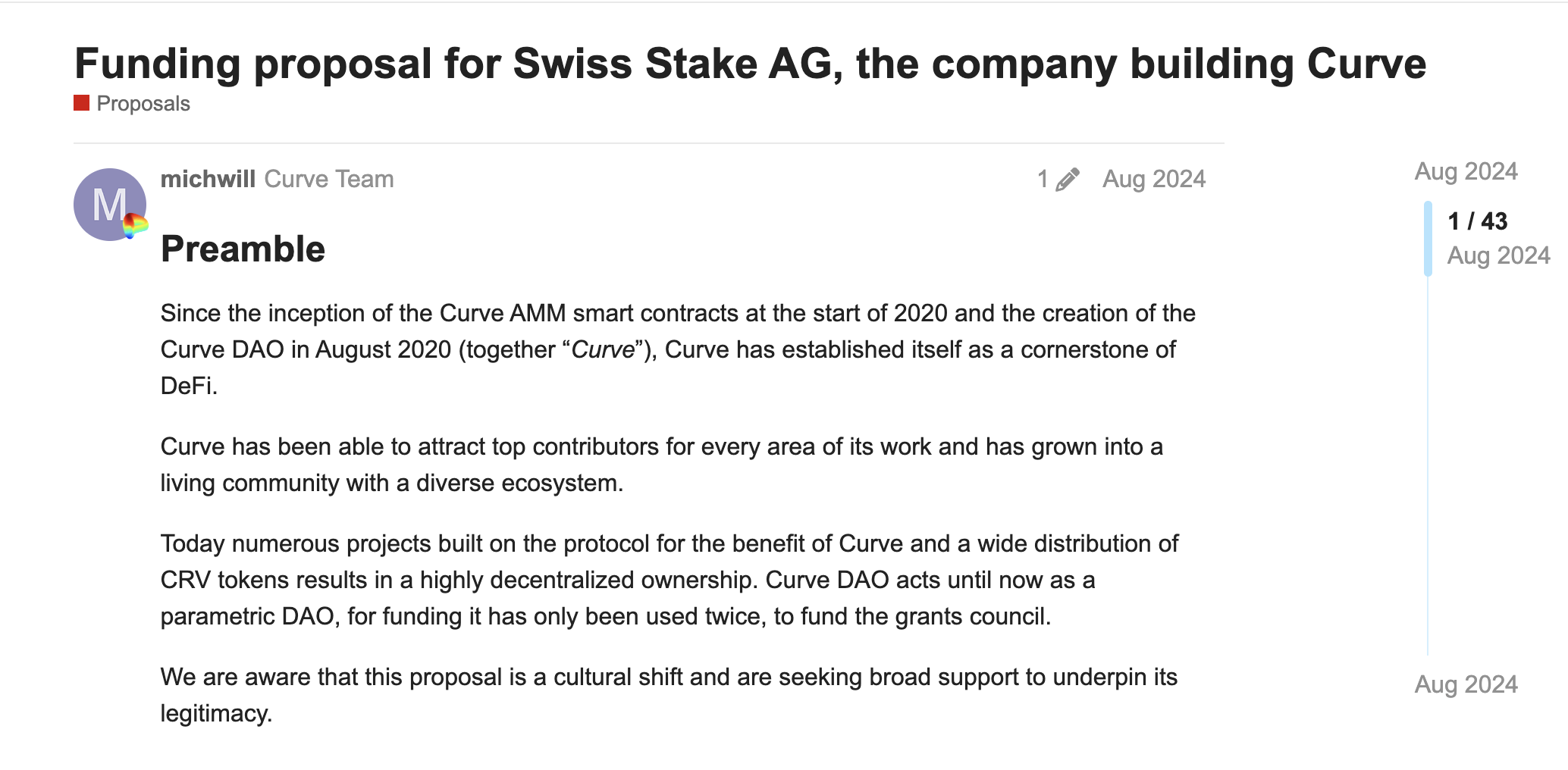
The 2024 proposal for a subsidy to Swiss Stake AG. Source: Curve board
Egorov noted that the proposal was revised and resubmitted in December 2025, and the reformulated proposal received a turnout of more than 80% from DAO members.
An analysis last year by blockchain development company LamprosTech found that “turnout at most DAOs rarely exceeds 15%, concentrating decision-making power in the hands of a small, active group.”
Curve token holders lock their tokens for a long period of time, which encourages long-term involvement in governance, Egorov said.
Egorov said DAOs represent a new model for human organization that is distinct from a corporation or a self-sovereign country but contains elements of a sovereign country, including political parties that disagree on how a protocol should be administered.
Related: Core technical contributor to end involvement with Aave DAO
The Aave dispute highlights challenges in onchain governance and intellectual property rights
In December 2025, a governance dispute erupted between Aave Labs, the main development company of Aave products, and the Aave DAO over fees for the integration with DeFi exchange aggregator CoW Swap.
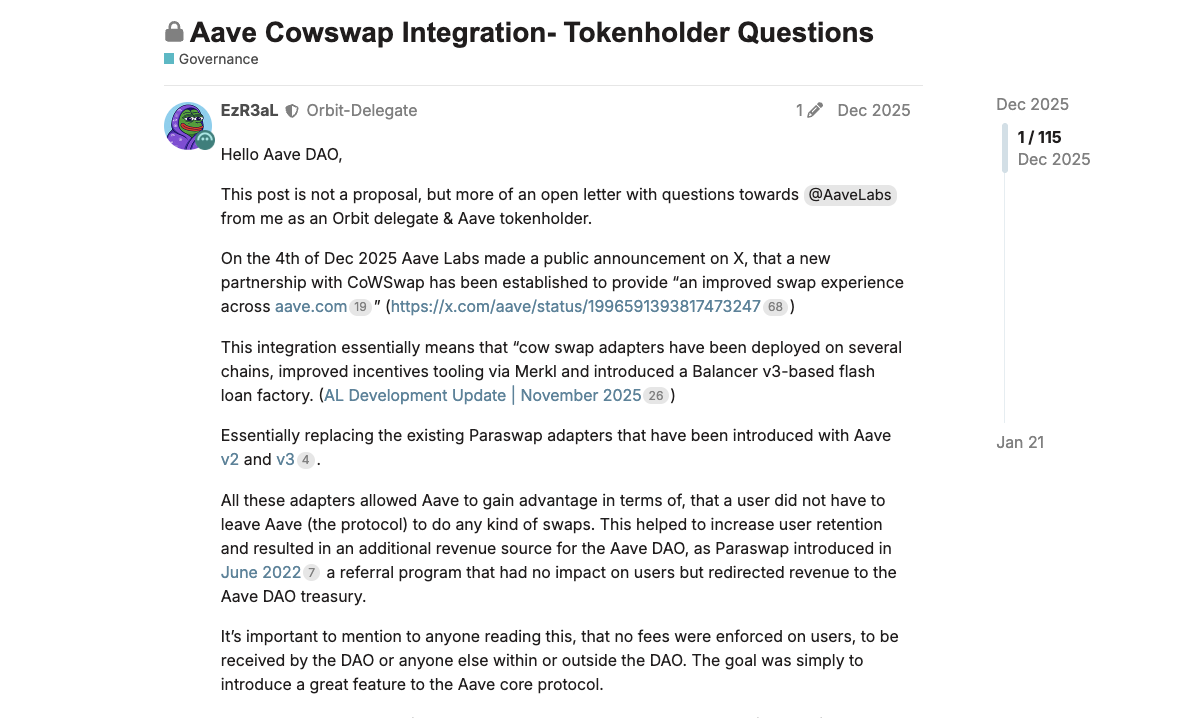
One member of the Aave DAO asks about the fees for the CoW Swap integration. Source: Aave board
Members of the DAO were critical of the integration’s fees going directly to a wallet managed by Aave Labs, and the backlash sparked a debate over which entity has rightful control of intellectual property on the DeFi platform.
A proposal was subsequently submitted to the Aave DAO to bring Aave’s brand assets and intellectual property under the DAO’s control; it ultimately fell through.
Legal recognition of DAOs could ease governance disputes
DAOs cannot interact with the real world without regulated legal structures, such as corporate entities or bank accounts, and DAO control over intellectual property is a common governance problem, Egorov said.
DAOs are great for governing anything onchain, he said, adding that users should also experiment with DAOs for offchain elements, though centralized companies may be better suited to managing offchain structures.
If DAOs could be legally recognized and interact with the traditional financial world, which owns corporate entities and bank accounts, it could ease governance disputes, Egorov said, adding that the legal system still needs to catch up with the latest technology.
Magazine: Real AI Use Cases in Crypto, #2: AIs can run DAOs