
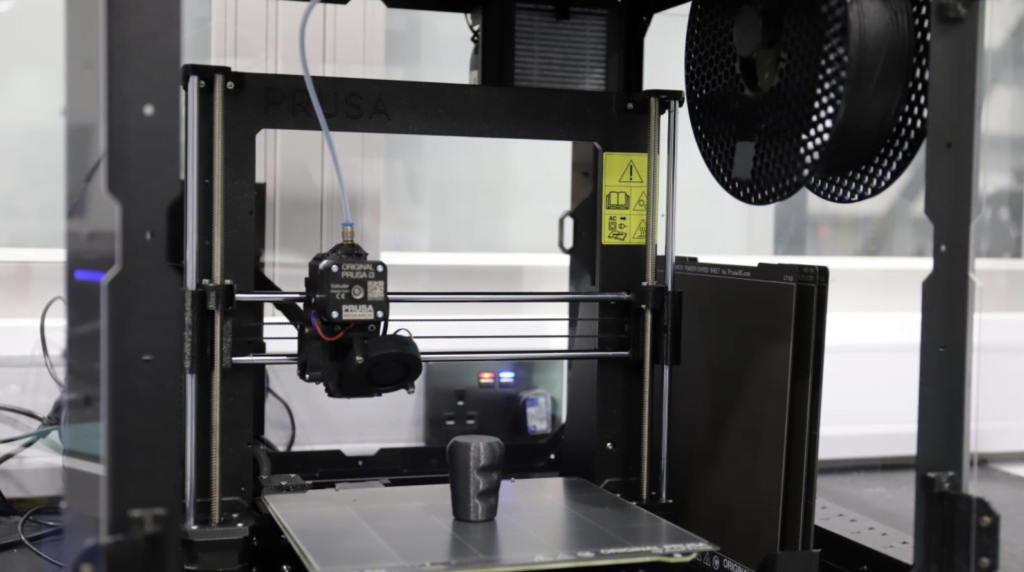
Autentica Car Parts, a start-up based in Sci-Tech Daresbury, has launched a digital marketplace that allows Original Equipment Manufacturers (OEMs) to sell 3D-printable car part designs to authorized dealers and repair centres. This new platform uses NFTs to protect and certify the designs.
Digital transformation in the auto parts industry
The platform offers a different approach to the way spare parts are manufactured and distributed. Through the use of NFTs, the platform aims to ensure that buyers purchase genuine OEM replacement parts that can be 3D printed locally on demand. This not only helps the OEMs maintain control over their designs but also helps prevent intellectual property infringement.
Moreover, the Autentica platform brings remarkable environmental and financial benefits. It claims to reduce non-production costs, such as storage, by up to 70% and also reduce the carbon footprint of transportation by 40%. The platform received funding from Innovate UK and has been tested with 500 customers, including OEMs and car dealers. It also has an international network of 600 3D printing service providers.
Developed in partnership
The platform is not a solo project, but the result of a collaboration between various parties. The University of Sheffield’s Advanced Manufacturing Research Center (AMRC) and cloud technology company Oracle worked with Autentica Car Parts on its development. According to Irma Gilbert, CEO of Autentica Car Parts, the platform integrates three key digital technologies: additive manufacturing, distributed ledger and artificial intelligence.
Launch event and future prospects
Autentica Car Parts will host a full-day event at Sci-Tech Daresbury on November 1, 2023 to formally introduce this new offering. This event is expected to feature keynote speeches, presentations, roundtable discussions and live platform demonstrations.
Irma Gilbert explained the platform’s solutions to today’s challenges:
“The aftermarket in the automotive parts supply chain globally faces several perennial challenges, such as the expensive storage of spare parts in warehouses; high logistics costs due to time-consuming production and shipping; and low-risk resilience due to cross-border transportation, which can significantly impact delivery times. She continues: “Digital technologies are catalysts in driving a radical transformation of global supply chains, including harnessing the power of automation, analytics and intelligence to improve efficiency, visibility, sustainability and resilience.”
In summary, the Autentica platform is positioned as a solution to several challenges in the automotive parts supply chain. These include costly warehouse storage, high logistics costs and low-risk resilience due to cross-border transportation. With the support of Innovate UK and key industry partners, it aims to provide a more efficient and sustainable model for car parts distribution and is a great example of the real-world applications of blockchain technology.