
Decentralized Finance (DeFi) is at the forefront of a financial revolution, creating a paradigm where smart contracts and decentralized applications replace traditional financial intermediaries. But innovation comes with scrutiny, and these entities are now facing a new wave of regulatory scrutiny in the United States.
The US regulatory environment, marked by a series of actions by the Commodity Futures Trading Commission (CFTC) and the Securities and Exchange Commission (SEC), emphasizes a stringent stance that pushes DeFi entities towards compliance and operational transparency
Has DeFi become illegal in the US?
Web3 legal strategist Jose Bencomo likened the current regulatory environment in the US to “traversing a field full of landmines.” The CFTC’s recent actions against DeFi entities such as Opyn, ZeroEx, and Deridex underscore a tough stance on regulatory compliance and operational transparency.
These actions and the lack of clear guidelines pose a threat to innovation. They could also deter new entrants into this growing sector, signaling a more aggressive regulatory approach. Additionally, the SEC has warned of more legal action against centralized exchanges and DeFi platforms, underscoring the seriousness of compliance.
“The recent regulatory actions indicate likely consolidation in the industry as smaller protocols struggle with compliance, but could also pave the way for a more mature, compliant DeFi ecosystem. The long-term reverberations remain obscured, but the substantial impact to date is undeniable, creating a robust dialogue that will likely continue for the foreseeable future,” Bencomo told BeInCrypto.
Amid this hostile regulatory environment, DeFi and Web3 companies are being urged to establish roots outside the US. Like Coinbase, Ripple and other companies, they must tap international markets as U.S. regulations evolve to survive.
Read more: Top 5 DeFi Lending Platforms
Bencomo also recommended that DeFi protocols be aligned with US compliance standards, similar to those of traditional financial entities. That is why we focus on anti-money laundering (AML) and Know Your Customer (KYC) regulations.
This position, complemented by limiting US citizens’ access to their platforms, could provide a prudent buffer against potential financial setbacks resulting from non-compliance.
“Establishing a robust compliance blueprint is critical, particularly detailing the steps towards regulatory registration and customer identification. The next step involves the actual rollout of this plan, including setting up KYC and AML frameworks, deploying transaction monitoring mechanisms and appointing a compliance custodian. Periodically reviewing and fine-tuning these compliance protocols, in sync with regulatory updates, is essential to maintaining compliance integrity,” Bencomo said.
Crypto regulation at work
On a global level, the regulatory environment towards DeFi in the US stands in stark contrast to the more progressive attitudes in regions such as the EU, Singapore and the UK. There, regulators are developing regulatory frameworks to promote DeFi innovations.
In contrast to the US’s cautious approach, these regions are promoting the growth of DeFi through regulatory sandboxes and frameworks for crypto assets. Such a difference underlines the need for the US to adapt to changing paradigms to remain globally competitive.
“US regulators can gain valuable insights from the balanced regulatory approaches being implemented globally. Key lessons include promoting an enabling environment for innovation and ensuring consumer and investor protection. Setting up regulatory sandboxes that enable a controlled environment for testing new DeFi products provides regulators with a better understanding of the technology and its implications. Furthermore, a collaborative approach, by working with DeFi entities in the regulatory process, can lead to the development of fair, practical regulations that meet industry growth and user protection,” Bencomo emphasized.
Read more: Crypto regulation: what are the pros and cons?
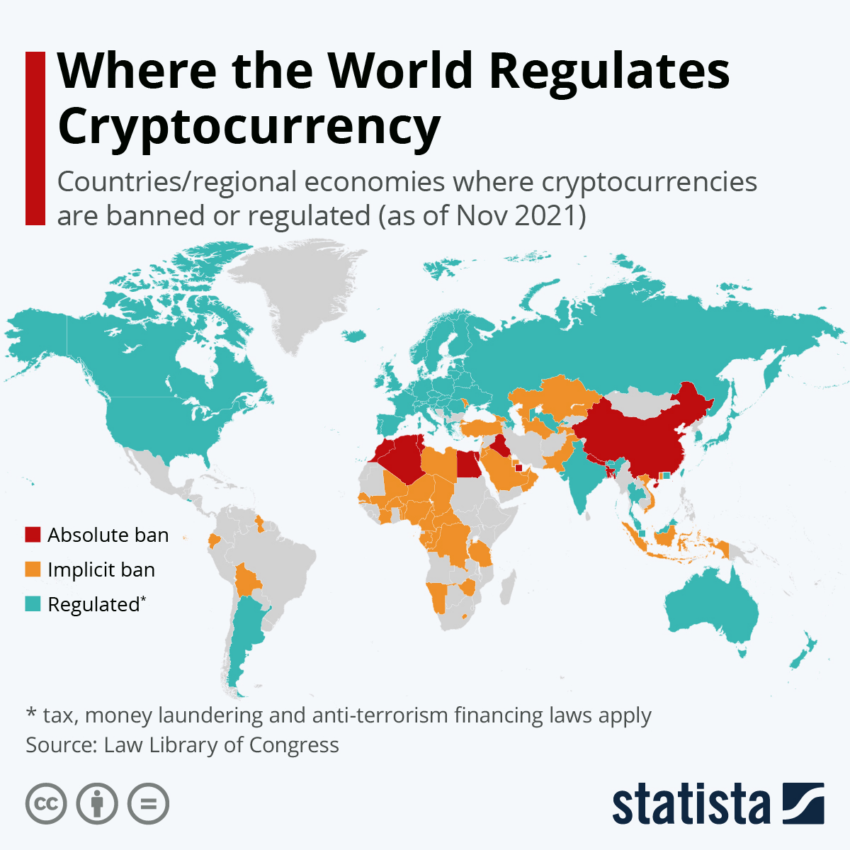
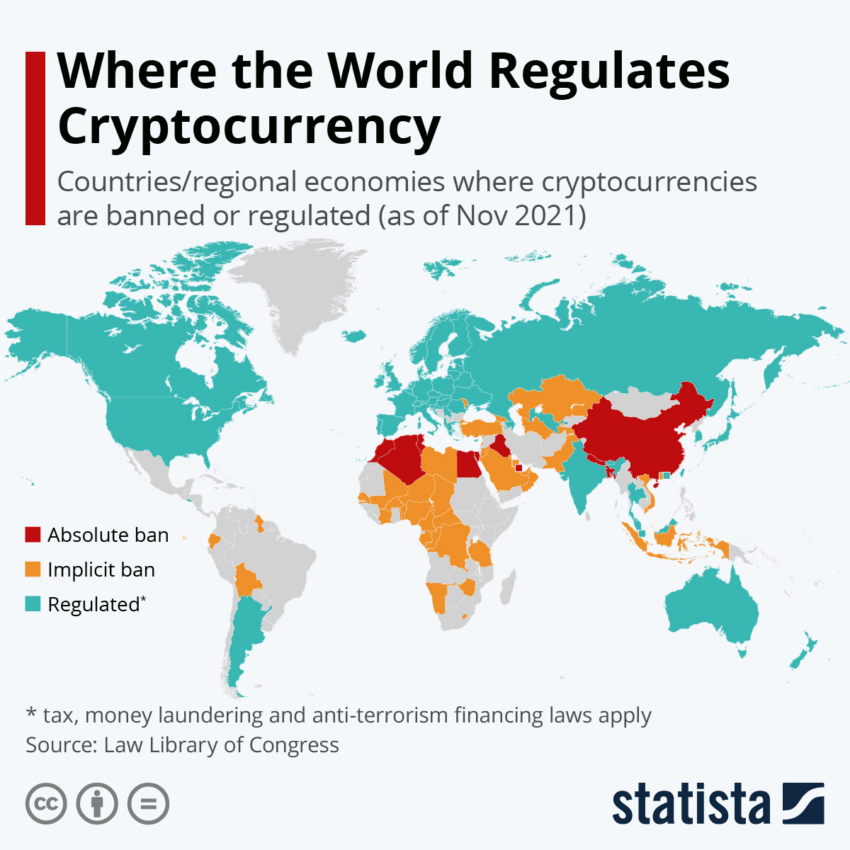
Crypto regulation worldwide. Source: Statista
Additionally, technology solutions such as verifiable credentials (VCs) and zero-knowledge proofs (ZKPs) are heralded as critical tools in aligning with regulatory requirements while preserving user privacy.
VCs provide a digital representation of personal credentials, facilitating compliance with KYC and AML guidelines without direct access to personal data. Similarly, ZKPs provide a cryptographic way to validate ownership of information without revealing the information itself, which is instrumental in age verification without disclosing date of birth.
“While the trade-off between decentralization and permissioned constructs is palpable, with potential risks of censorship, the overarching benefits of regulatory alignment, cultivating trust, and enabling users often outweigh the decentralization trade-off for many DeFi entities. As the DeFi landscape matures, the emergence of more permissioned designs is expected given their instrumental role in reconciling the decentralized nature of DeFi with regulatory compliance, creating an enabling environment for DeFi growth and adoption ,” said Bencomo.
Looking ahead, the balance between innovation in DeFi and regulatory compliance depends on a synergy of education, collaboration and compromise. Bencomo emphasized the importance of a collaborative ethos where regulators and DeFi firms work together to create fair, workable regulations.
Setting up regulatory sandboxes can provide a controlled testing ground for new DeFi products and services. This can help regulators understand the potential and risks of DeFi.
“By adopting a learning mindset, staying abreast of DeFi developments and being open to adapting regulations in response to the rapidly evolving landscape, US regulators can create a regulatory framework that is both innovation-friendly and effective is in protecting the interests of stakeholders, and ensuring that the US continues to play a critical role in the global blockchain and DeFi arena,” said Bencomo.
Together for the growth of Web3
Forming industry associations could also resolve the tension between DeFi innovation and regulatory compliance. According to Bencomo, these DeFi associations can act as a channel to represent their interests and engage with regulators on fair regulatory frameworks.
Regular dialogues between the two sides can promote trust and understanding and identify opportunities for regulatory improvement.
“Working with regulators and initiating dialogues to clarify your activities and the potential of the DeFi sector is invaluable. Leverage legal expertise with an understanding of fintech and DeFi regulations and establish robust compliance procedures such as KYC and AML processes. Maintain operational transparency and maintain detailed, auditable records to build trust with regulators and users. A thorough risk assessment in combination with insurance can limit financial risks,” concludes Bencomo.
In light of regulatory challenges and potential compliance measures, the evolution of DeFi companies is at a crucial juncture. Integrating technological innovations, active engagement with regulators, and a willingness to adapt to changing regulatory mandates are essential to navigating this complex terrain.
A judicious balance between regulatory compliance and promoting innovation can cultivate a favorable ecosystem for DeFi growth. This will ensure stakeholder protection and propel the US to the forefront of the global DeFi story.