
The Bank of Canada published a staff note on decentralized finance (DeFi) on October 17, assessing the innovations that have made it popular and the challenges and risks associated with using it.
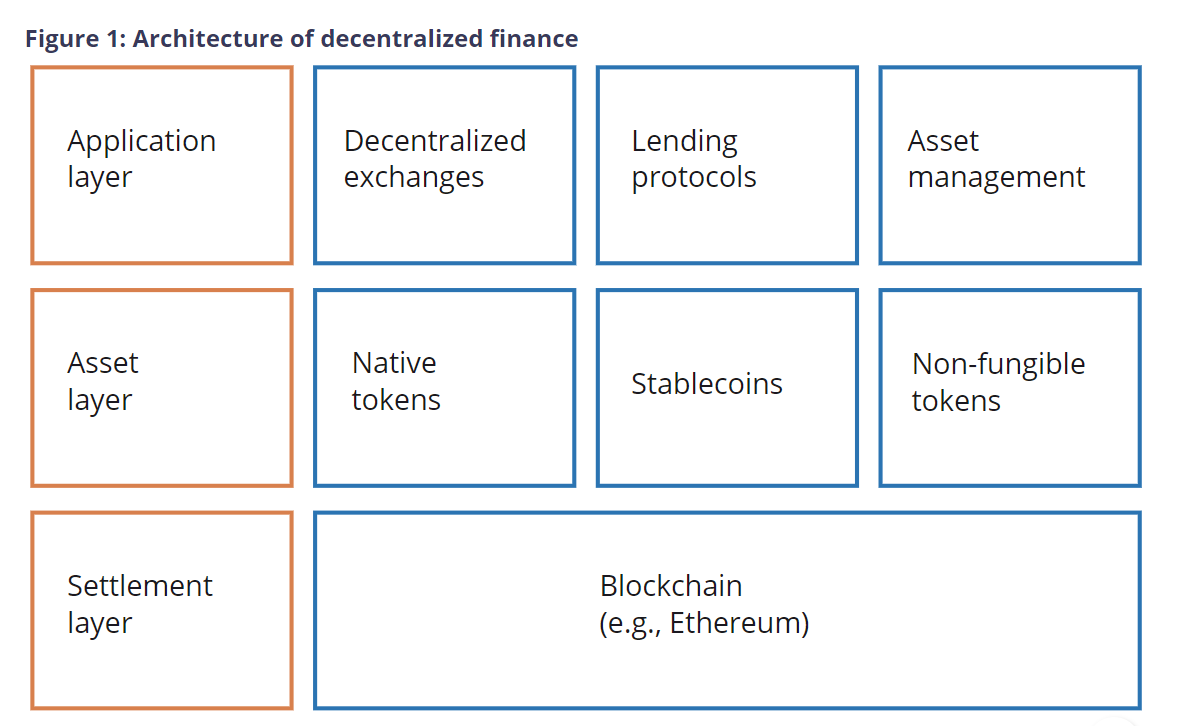
The staff note describes DeFi as a multi-layered structure, with the Ethereum blockchain serving as the bottom layer (or settlement layer). Developers are building a variety of tools and services on top of the main blockchain, including tokenization, lending and borrowing services, and much more.
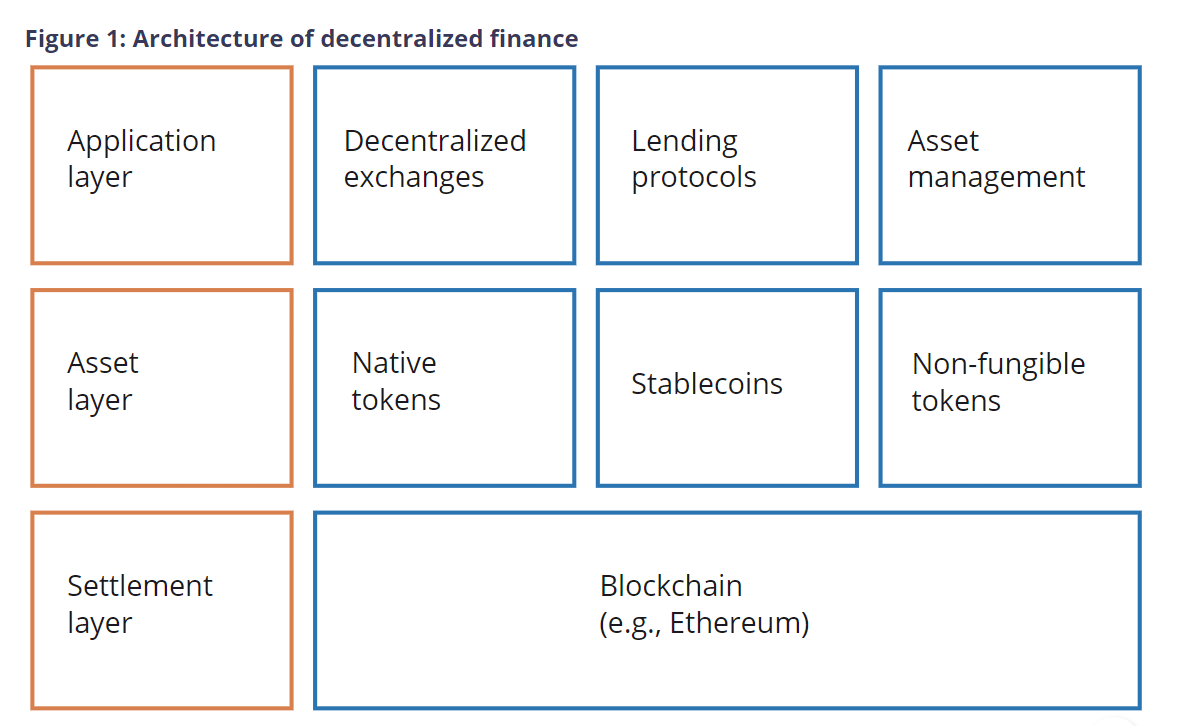
DeFi architecture. Source: Bank of Canada
The staff note sheds light on the rising popularity of the DeFi ecosystem from 2020 and how it became an integral part of the crypto economy, reaching billions in volume in the coming years. The ecosystem’s popularity declined starting in 2022 with the collapse of several major crypto platforms with significant DeFi exposure, including Terra.
Speaking about the key features of the decentralized ecosystem, the contributors praised the “composability” of DeFi, which allows the apps and services in the ecosystem to be connected. The Bank of Canada note highlights three of the key areas where DeFi can transform the financial system:
- A frictionless financial service offering: A decentralized ledger-based system reduces the frictions experienced in the existing system and expands the scope of financial services currently offered.
- Open competition: The DeFi ecosystem is open for anyone to build and access, given its open-source nature; thus, it makes way for more competition and offers better options for the end user.
- Transparency: Using programmable smart contracts eliminates middlemen and increases transparency in the system, as everything is accessible to people analyzing it.
In addition to highlighting key DeFi innovations that could transform the traditional financial system, the staff note also addressed the challenges and risks associated with the DeFi ecosystem, claiming that “despite its innovations and capabilities, the overall economic benefits of DeFi remain limited.”
Related: Bank of Canada emphasizes the need for stablecoin regulation as legislation is tabled
The note lists three key challenges facing the DeFi system today: the lack of tokenization in the real world, the higher concentration of interconnections within, and its dependence on the unregulated centralized financial ecosystem.
The note also highlighted the regulatory challenges posed by the DeFi ecosystem and the increase in vulnerabilities in the ecosystem, which have led to several hacks and exploits. The note claimed that “the anonymous and borderless nature of public blockchains complicates regulatory oversight.”
Magazine: US law enforcement agencies are stepping up the fight against crypto-related crime