
Earlier this year, the market saw unprecedented adoption of Ordinals and their associated inscriptions. Ordinal numbers serve as a unique numbering scheme for satoshis, allowing users to track and transfer individual satoshis. Inscriptions are a form of NFTs on the Bitcoin network, allowing users to etch their messages onto the Bitcoin blockchain. The introduction of the Ordinals theory marked a major milestone and heralded Bitcoin’s entry into the NFT space.
When the popularity of Ordinals and Inscriptions soared, some market observers speculated that it was a fad. However, recent data about the chain indicate otherwise. The demand for Ordinals remains high, and the Inscriptions phenomenon may not diminish anytime soon.
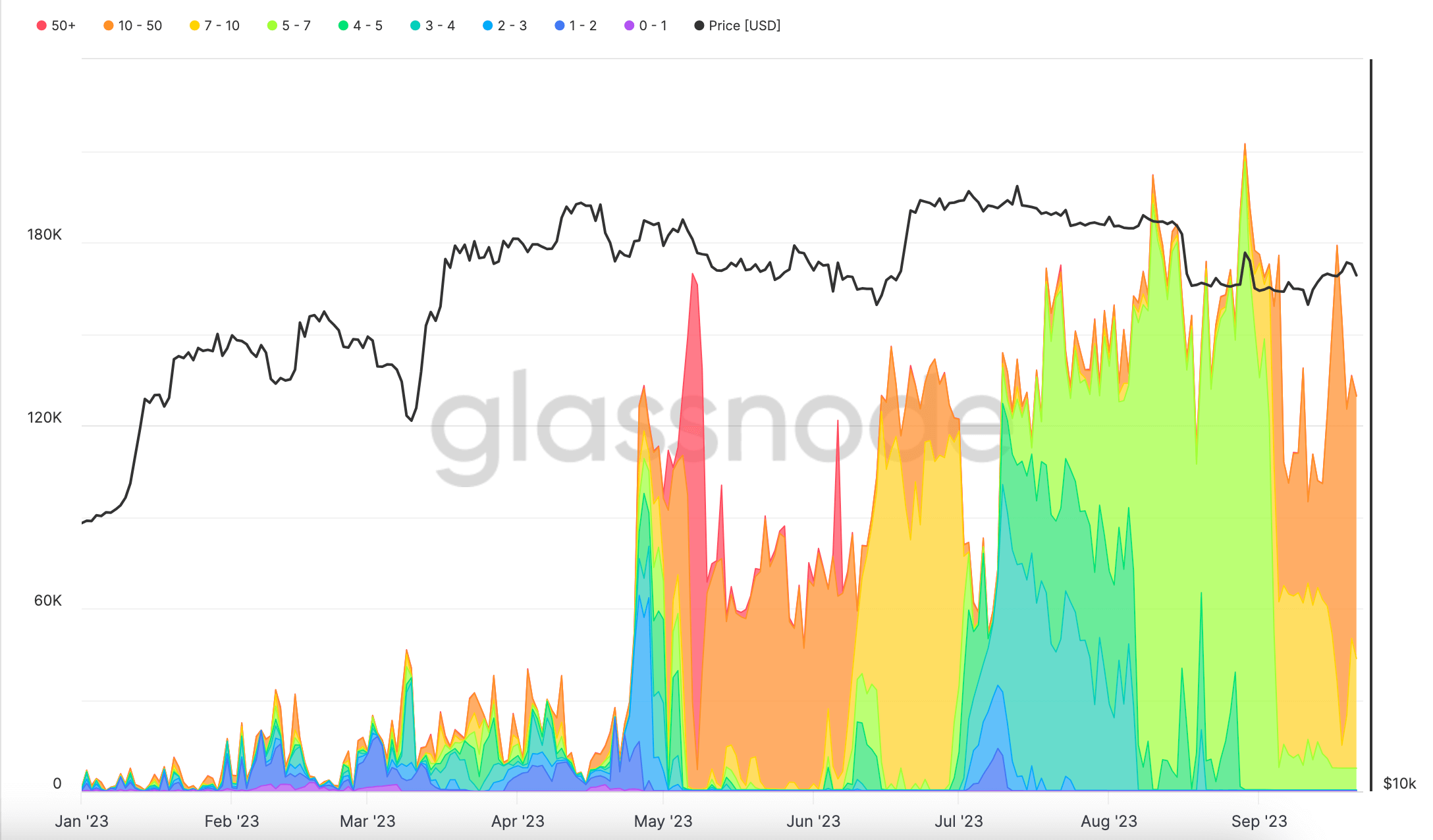
The Bitcoin mempool, a repository for unconfirmed transactions, is a crucial metric to measure this demand. An overcrowded mempool indicates a large number of pending transactions, which often leads to higher transaction fees and congestion in the Bitcoin network. The mempool has not cleared since April this year, indicating continued activity and demand.
This congestion in the mempool correlates with an increase in the number of new inscriptions.
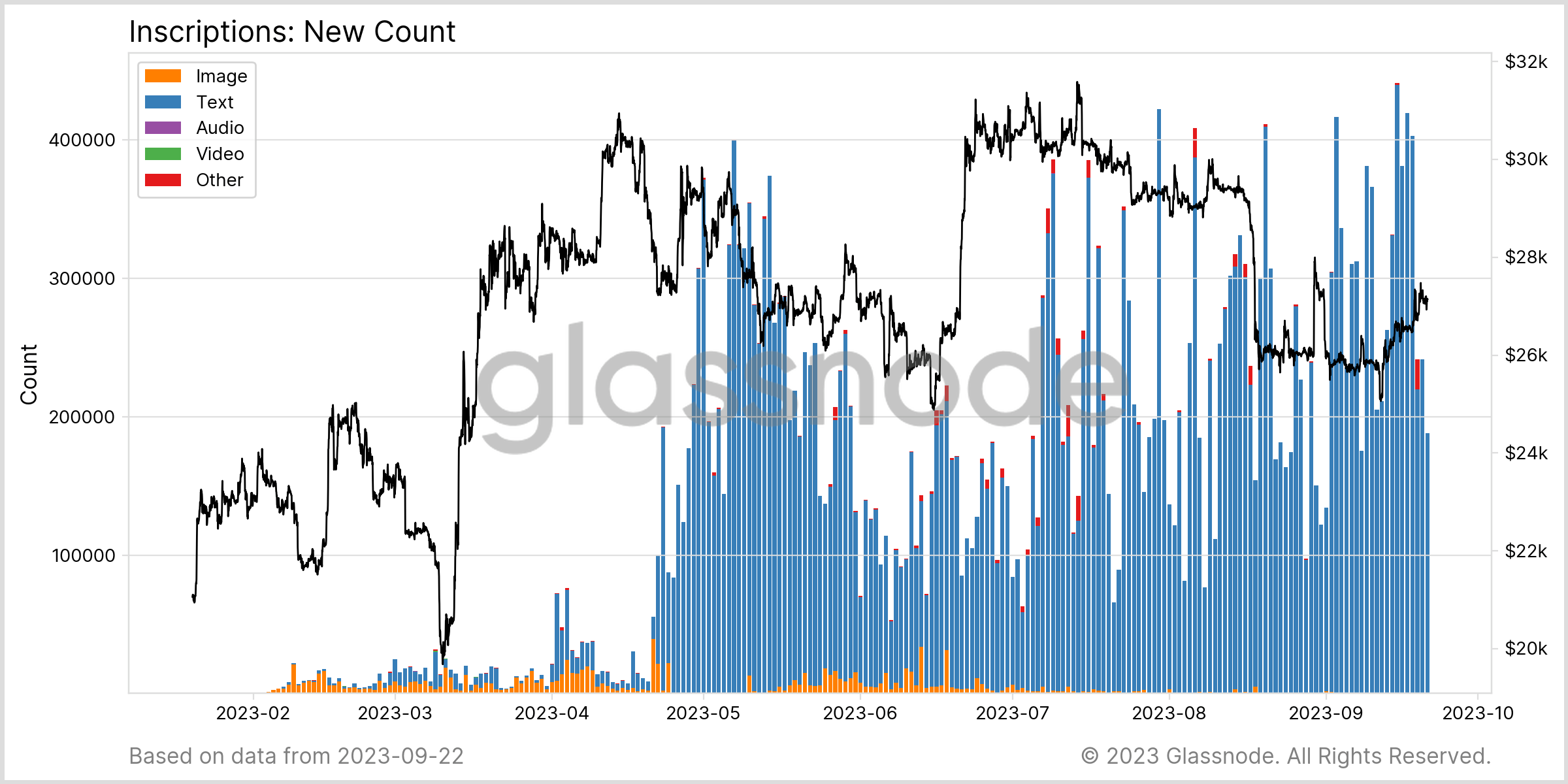
According to data from Glassnode, there was a notable increase in the daily creation of new inscriptions by the end of April. By mid-May, 400,000 new inscriptions had been created in just one day. Although a dip in June indicated a possible decline in interest, the numbers recovered. September ended with a record high of 450,000 new inscriptions in one day.
While in the early period image-based inscriptions predominated, text-based inscriptions have now taken the lead.
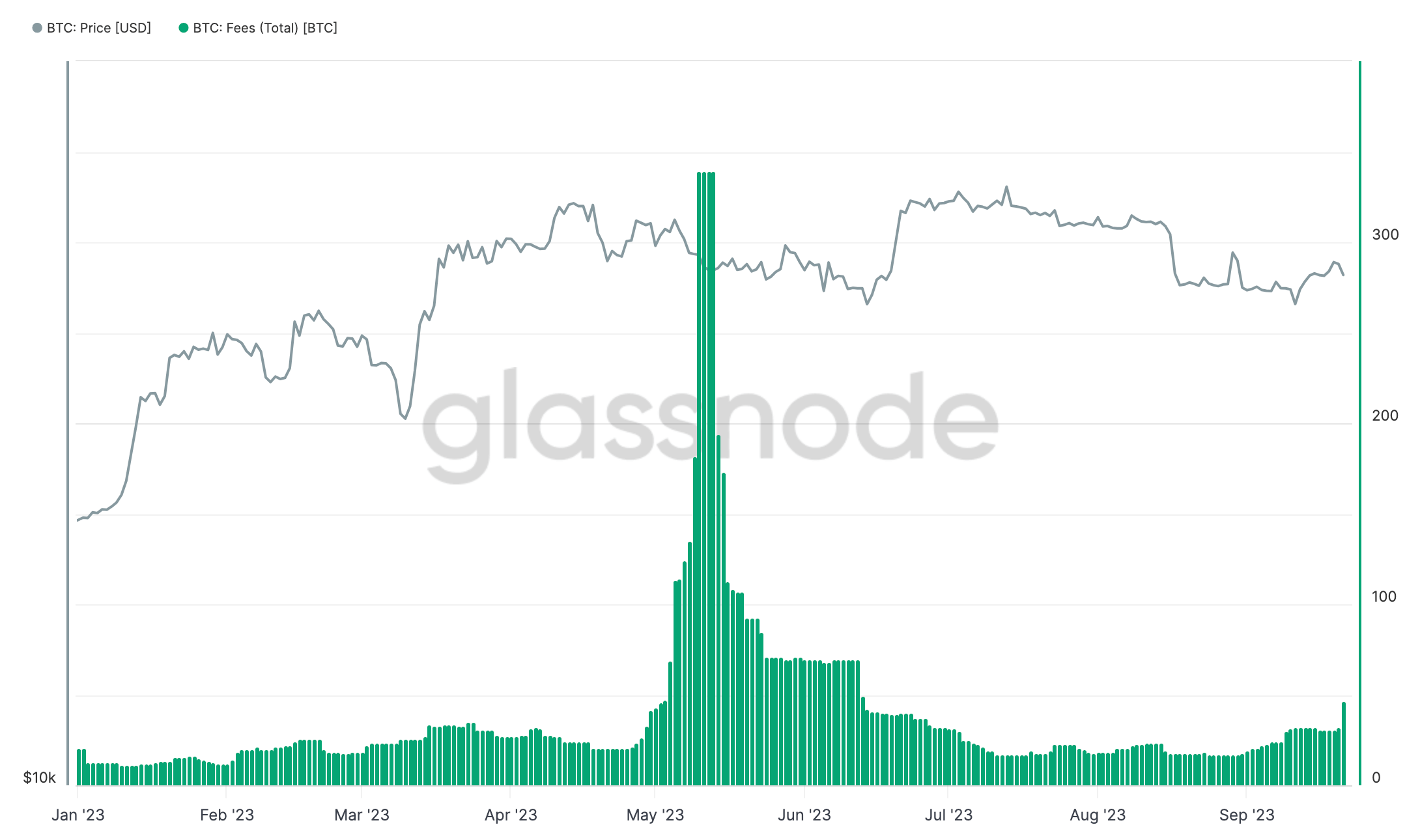
Bitcoin transaction fees rose in May due to the surge in subscriptions and the overcrowded mempool. Despite continued demand for Ordinals, fees have since stabilized. This stabilization suggests that the market has adapted to the Inscriptions phenomenon and that the Bitcoin network has found equilibrium.
The continued demand for Inscriptions suggests that they may have found a niche and a dedicated user base. Their impact on the Bitcoin network, especially transaction fees and blockspace, cannot be ignored. While the initial surge may have caused some disruptions, the network’s ability to adapt and stabilize is a testament to its resilience.
The post Persistent Bitcoin Mempool Congestion Shows Demand for Ordinals Inscriptions appeared first on CryptoSlate.